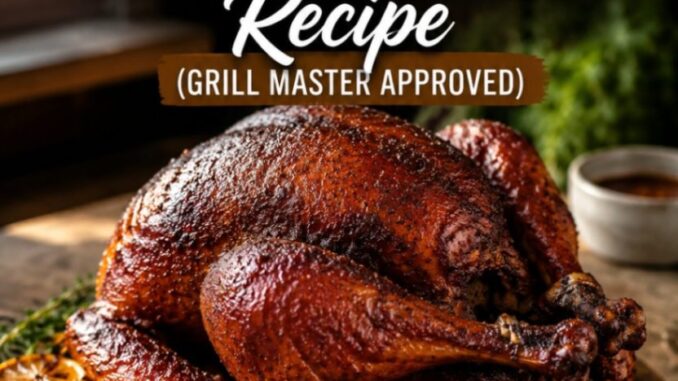
The Best Smoked Whole Turkey Recipe (Grill Master Approved)
There is something deeply satisfying about lifting the lid on your smoker and seeing a mahogany-skinned whole turkey glistening in the morning light. After years of running smokers on crisp autumn mornings, firing up everything from offset smokers to pellet grills, I’ve refined a technique that delivers deep smoke flavor, crispy skin, and unbelievably juicy meat every single time.
If you’ve ever served a Thanksgiving or weekend feast with a dry breast or rubbery skin, you know how disappointing turkey can be. This smoked whole turkey recipe solves both problems by pairing a reliable wet brine with low-and-slow wood smoke, followed by a quick heat boost at the end to render the skin perfectly crisp.
Why You’ll Love This Recipe
-
Consistently Moist Meat: Brining injects moisture directly into the muscle fibers, giving you a huge safety margin so the breast stays tender while the dark meat cooks through.
-
Crispy, Golden Skin: Most smoked turkeys end up with tough, rubbery skin because smoke house temperatures are too low to render fat. Our heat-step technique solves that completely.
-
Balanced Smoke Flavor: Using mild fruitwood paired with hardwood gives you a rich, appetizing color without bitter creosote undertones.
-
Frees Up Your Kitchen Oven: Moving the centerpiece protein outdoors clears up valuable oven real estate for side dishes, pies, and rolls.
Ingredients
The Turkey & Prep
-
1 Whole Turkey (12 to 14 lbs): Fresh or completely thawed. Smaller birds cook far more evenly in a smoker than giant 20-pounders.
-
Unsalted Butter (1/2 cup / 1 stick): Melted, to brush over the skin during the cook.
-
Olive Oil or Neutral Oil (2 tablespoons): Works as a binder for the rub.
The Wet Brine
-
Water (1 gallon): Cold, partitioned (half boiled to dissolve solids, half iced to cool down quickly).
-
Kosher Salt (1 cup): Diamond Crystal or 3/4 cup Morton’s. (Always measure salt by weight or brand type, as grain size varies dramatically).
-
Brown Sugar (1 cup): Dark or light, packed. Adds subtle sweetness and aids skin browning.
-
Black Peppercorns (2 tablespoons): Whole.
-
Garlic Cloves (6 to 8 heads): Smashed open.
-
Fresh Herbs: 4 sprigs rosemary, 6 sprigs thyme, 4 sage leaves.
-
Orange (1 whole): Quartered.
-
Ice (2 quarts): To chill the brine instantly before adding the raw bird.
The Dry Rub
-
Dark Brown Sugar (2 tablespoons)
-
Smoked Paprika (2 tablespoons): Provides beautiful natural red mahogany color.
-
Garlic Powder (1 tablespoon)
-
Onion Powder (1 tablespoon)
-
Coarse Black Pepper (1 tablespoon)
-
Dried Thyme (1 teaspoon)
-
Kosher Salt (1 teaspoon): Kept minimal because the bird is already brined.
Ingredient Substitutions
-
Kosher Salt: If you only have fine table salt, cut the measurement in half. Table salt grains are compact and will make your brine unpalatable.
-
Wood Options: Apple, cherry, and pecan are the gold standard for poultry. Apple provides sweet mellow smoke, cherry imparts a dark reddish color, and pecan offers a nutty depth. Avoid heavy woods like mesquite, which easily overwhelm delicate poultry.
-
Fresh Herbs: Dried herbs work in the brine if needed. Use 1 tablespoon of dried poultry seasoning in place of fresh sprigs.
-
Butter: Ghee (clarified butter) or duck fat works as an incredible substitute for brushing the bird during the final phase.
Equipment Needed
-
Smoker: Pellet grill, offset smoker, charcoal kettle, or drum smoker capable of holding a steady temperature between 225°F and 325°F.
-
Wood Chunks or Pellets: Apple, cherry, or pecan wood.
-
Large Brine Bucket or Cooler: Food-grade 5-gallon bucket or a heavy-duty brining bag inside a cooler.
-
Digital Instant-Read Thermometer: Essential for food safety and preventing dry meat.
-
Leave-in Dual-Probe Thermometer: Monitors smoker ambient temp and turkey internal temp simultaneously.
-
Kitchen Twine: For trussing the legs cleanly.
-
Paper Towels: For drying the skin completely before smoking.
Step-by-Step Instructions
Step 1: Prepare and Chill the Brine
In a large stockpot, combine 4 cups of water, kosher salt, brown sugar, smashed garlic, peppercorns, orange quarters, and fresh herbs. Bring to a simmer over medium-high heat, stirring until the salt and sugar completely dissolve. Remove from heat immediately.
Pour the hot concentrate into your food-safe brining bucket, then stir in the remaining cold water and ice. Crucial rule: Never place raw poultry into warm brine, or you risk foodborne bacteria growth. Verify the brine temperature is below 40°F before adding the turkey.
Step 2: Brine the Turkey
Remove the giblets and neck from the turkey cavities. Submerge the turkey breast-side down in the cold brine. Cover tightly and refrigerate (or keep cold in an ice-packed cooler) for 12 to 18 hours. Avoid brining longer than 24 hours, or the muscle tissue will break down and turn mushy.
Brining Timeline:
12 to 14 lb Turkey = 12–18 hours max in brine at < 40°F
Step 3: Dry the Skin (The Secret to Crispness)
Remove the turkey from the brine and discard the liquid. Do not rinse the bird; rinsing spreads bacteria around your sink and isn’t necessary. Thoroughly pat the entire surface and cavity dry with paper towels.
Place the turkey uncovered on a wire rack set over a baking sheet in the refrigerator for at least 4 to 12 hours. This air-drying process dehydrates the outer skin layer, ensuring it smokes up crisp rather than rubbery.
Step 4: Season and Truss
Lightly rub the turkey skin with olive oil. Mix your dry rub ingredients in a small bowl and sprinkle evenly over the entire bird, including inside the cavity and under the skin covering the breast.
Fold the wing tips back behind the shoulders so they don’t burn. Tie the ends of the drumsticks together loosely with butcher’s twine to help the bird cook evenly.
Step 5: Fire Up the Smoker
Preheat your smoker to 225°F–250°F. Add your chosen wood chunks or pellets (apple or cherry wood shines here). Set up your smoker for indirect heat—you want pure convection smoke, direct flame under the turkey will scorch it.
Step 6: Smoke Low and Slow
Place the turkey directly on the grates breast-side up. Insert your leave-in probe into the thickest part of the breast, making sure not to hit the bone. Close the lid and let the wood smoke penetrate the meat for approximately 2.5 to 3 hours.
At this stage, you will notice the skin taking on a rich amber color and the aroma turning deep and savory.
Step 7: The Heat Crisp Finish
Once the breast temp hits roughly 135°F–140°F, raise your smoker temperature to 325°F–350°F. Melt your butter and gently brush it across the turkey skin. This temperature increase renders the skin fat quickly and crisps the exterior while finishing the cooking process inside.
Step 8: Test for Doneness
Pull the turkey off the smoker when the instant-read thermometer reads 160°F in the thickest part of the breast and 175°F in the thigh joint. The breast temperature will carry over to a safe 165°F while resting.
Step 9: Rest Before Carving
Transfer the turkey to a large cutting board with a juice groove. Tent loosely with aluminum foil and let it rest undisturbed for 20 to 30 minutes. Slicing too early lets all the internal juices escape onto your board, leaving you with dry meat.
Expert Tips
-
Choose the Right Size Bird: Two 12-pound turkeys always cook better, smoke faster, and stay juicier than one massive 20-pound bird.
-
Control Your Smoke Quality: Aim for thin, blue smoke drifting from your stack. Thick, white, billowy smoke means incomplete combustion and imparts a bitter, metallic creosote taste on the turkey skin.
-
Monitor Ambient Temps: Cold wind or low outside temperatures drag smoker temps down rapidly. Keep extra fuel on hand if smoking in late autumn or winter.
-
Use a Juice Tray: Place an aluminum drip pan on the lower rack beneath the turkey filled with a cup of apple cider and chicken broth. This catches rich drippings for smoked gravy and keeps humidity high inside the chamber.
Common Mistakes to Avoid
| Mistake | Why It Happens | How to Avoid It |
| Rubbery Skin | Smoking at consistently low temps without high heat at the end. | Finish the cook at 325°F–350°F and dry skin in the fridge beforehand. |
| Dry Breast Meat | Pulling the bird at 165°F breast temp without accounting for carryover cooking. | Pull at 160°F breast temp; carryover heat rises to 165°F naturally while resting. |
| Oversalted Flavor | Using table salt instead of kosher salt in the brine. | Measure salt carefully by weight or stick to coarse Kosher salt formulations. |
| Uncooked Thighs | Breast cooks faster than thigh joints close to the bone. | Ensure indirect heat distribution; aim thigh joints toward the hotter side of your smoker. |
Storage
-
Refrigeration: Carve leftover turkey meat off the bone within two hours of serving. Store sliced meat in airtight glass containers or zip-top bags with a spoonful of broth or pan juices for up to 4 days.
-
Freezing: Wrap carved meat tightly in plastic wrap, then pack inside heavy-duty freezer bags or vacuum-seal bags. Freeze for up to 3 months. Thaw overnight in the refrigerator before reheating.
-
Smoked Carcass: Save the stripped turkey bones! Smoke-infused bones make the best turkey stock or noodle soup base you’ll ever taste. Simmer with onions, carrots, celery, and bay leaves for 3 to 4 hours.
Reheating
-
Oven Method (Best for Moisture): Place sliced turkey into a baking dish. Drizzle with 2 to 3 tablespoons of chicken broth or gravy. Cover tightly with aluminum foil and heat at 300°F for 15 to 20 minutes until warmed through to 165°F.
-
Skillet Method: Heat a skillet over medium-low heat with a pat of butter and a splash of broth. Add turkey slices and cover with a lid for 3 to 5 minutes to steam-heat gently.
Nutrition Information (Estimated)
Serving Size: 6 oz cooked white/dark meat mix
| Nutrient | Amount per Serving |
| Calories | 340 kcal |
| Protein | 42 g |
| Total Fat | 16 g |
| Saturated Fat | 5 g |
| Cholesterol | 125 mg |
| Sodium | 680 mg |
| Carbohydrates | 2 g |
| Sugar | 1 g |
Leave a Reply