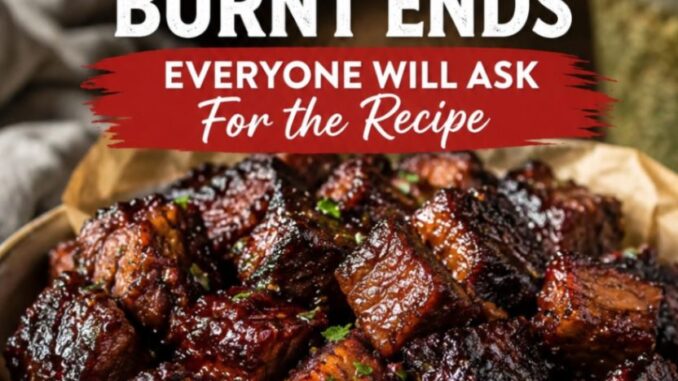
5 Ways to Make Brisket Burnt Ends Everyone Will Ask For the Recipe
There is a moment right after you open the smoker door when the heavy wood smoke clears and you see a tray of cubed brisket point glistening under a thick, dark bark. Those caramelized, melt-in-your-mouth bites—often called “barbecue candy”—are the absolute high point of low-and-slow cooking.
Getting brisket burnt ends right isn’t about secret tricks; it’s about understanding how fat, heat, and time transform a tough cut of beef into something tender and rich. Once you master the basic technique, you can tweak the flavor profile to match whatever vibe you are going for at your next backyard get-together.
Why You’ll Love This Recipe
-
Bite-sized perfection: Cutting the point muscle into cubes increases the total surface area, which means every single piece gets coated in rub, smoke, and sticky glaze.
-
Forgiving process: Unlike the lean flat portion of the brisket, the point muscle is marbled with rendered fat and connective tissue, making it almost impossible to dry out.
-
Versatility: You can stick to classic Kansas City sweet sauce, pivot to a spicy peach glaze, or go full savory with a black pepper and tallow bark.
-
Great for crowds: These small bites stretch a single brisket point to feed a large group easily, whether served as a main dish or an appetizer.
Ingredients
For the Brisket Base
-
1 whole beef brisket point (about 5 to 7 pounds, trimmed of hard surface fat down to 1/4 inch)
-
2 tablespoons coarse kosher salt (Morton’s works best for beef)
-
2 tablespoons coarse black pepper (16-mesh preferred for building a good bark)
-
1 tablespoon garlic powder
-
1 tablespoon yellow mustard (used strictly as a binder)
For the Braising Liquid & Glaze
-
1/2 cup unsalted butter, sliced into pats
-
1/2 cup dark brown sugar, packed
-
1/2 cup sweet barbecue sauce (Kansas City style)
-
2 tablespoons honey or dark molasses
-
1/4 cup beef broth or apple cider
Ingredient Substitutions
-
Beef Point Substitute: If you can’t buy just the brisket point at your local butcher, buy a whole packer brisket, smoke it whole until tender, and separate the point from the flat before cubing. Alternatively, chuck roast makes a surprisingly good budget-friendly substitute, though it lacks the heavy fat rendering of real brisket point.
-
Sugar: Swap dark brown sugar with maple syrup or agave nectar for a slightly different undertone.
-
Mustard Binder: You can substitute yellow mustard with hot sauce, pickle juice, or olive oil. The flavor cooks off completely, leaving only a surface for the dry rub to adhere to.
Equipment Needed
-
Smoker or Grill: A pellet grill, offset smoker, or Weber kettle configured for indirect cooking.
-
Hardwood Fuel: Oak, hickory, or pecan wood blocks/pellets offer the cleanest smoke profile for beef.
-
Meat Thermometer: Instant-read digital probe.
-
Disposable Foil Pans: Essential for catching rendered fat and holding the braising liquid.
-
Heavy-Duty Aluminum Foil: For wrapping during the initial smoke phase if needed.
-
Chef’s Knife: Sharp 8-inch to 10-inch knife to cleanly slice rendered brisket without tearing the crust.
The 5 Ways to Make Brisket Burnt Ends
Every variation starts with the same core technique: smoke the brisket point whole until it reaches an internal temperature of around 195°F to 200°F, cube it into 1-inch to 1.5-inch pieces, toss it with a glaze in a foil pan, and return it to heat for 45 to 60 minutes until sticky and fork-tender.
Here are five distinct ways to finish your brisket burnt ends, depending on your taste preferences:
1. Classic Kansas City Style (Sweet & Sticky)
This is the gold standard that made burnt ends famous. Toss the cubed brisket point with brown sugar, pats of butter, honey, and a tomato-based sweet barbecue sauce. Cover the pan loosely with foil for 30 minutes at 275°F to allow the fat to continue rendering into the sauce, then uncover for 15 minutes to let the sugars bubble and glaze over the meat.
2. Texas Bold & Savory (No Sugar, High Pepper)
If sweet sauce isn’t your thing, skip the sugar and honey entirely. Toss the cubed brisket in rendered beef tallow, coarse black pepper, a splash of Worcestershire sauce, and a thin splash of beef broth. Return the pan uncovered to a smoker running at 250°F for 45 minutes. You end up with deeply savory, rich bites that emphasize beef flavor and heavy smoke over sweetness.
3. Peach & Bourbon Glazed
Combine 1/2 cup of peach preserves, 2 tablespoons of bourbon, a pinch of red pepper flakes, and a cup of warm barbecue sauce. Toss this mix over the cubed beef along with a couple of pats of butter. As it renders down in the smoker, the natural pectin in the peach preserves creates a lacquer-like shine on the beef while the bourbon cuts through the heavy fat.
4. Hot Honey & Chipotle
For those who like heat with their sweet, mix 1/3 cup of hot honey with 2 tablespoons of finely minced chipotle peppers in adobo sauce and a splash of cider vinegar. The acid from the vinegar balances the richness of the rendered brisket fat, while the chipotle delivers a smoky, lingering heat that builds with every bite.
5. Garlic Butter & Mustard Carolina Twist
Toss the cubed point with 1/2 cup of melted garlic butter, 1/3 cup of mustard-based (Carolina style) barbecue sauce, and a tablespoon of apple cider vinegar. This style offers a tangy, sharp bite that cuts right through the unctuous fat of the brisket point, making it a crowd favorite for summer outdoor parties.
Step-by-Step Instructions
Step 1: Trim and Season
Inspect your brisket point. Remove any hard white fat that feels solid like rubber; this fat will never render down properly during cooking. Leave soft, pliable fat intact, trimmed down to roughly a quarter-inch thick. Apply a thin coat of yellow mustard over all sides of the meat. Dust the rub evenly across the entire surface. Let it rest at room temperature for 30 minutes while preheating your smoker.
Pro Tip: Look for coarseness in your black pepper. Fine table pepper tends to form an impenetrable paste, whereas 16-mesh coarse pepper allows smoke to penetrate while forming a distinct textured crust.
Step 2: Smoke the Point Whole
Set your smoker to 225°F–250°F using oak or hickory wood. Place the brisket point directly on the grates fat-side down to protect the meat from direct radiant heat. Smoke continuously until the internal temperature reaches 195°F, which typically takes anywhere from 6 to 8 hours depending on your smoker’s airflow.
Look for a dark mahogany bark that doesn’t rub off when touched with a finger. The meat should yield slightly when pressed, feeling somewhat soft like a firm sponge.
Step 3: Cube the Meat
Transfer the hot brisket point to a cutting board and let it rest for 15 minutes so the juices settle. Using a long, sharp knife, slice the meat into uniform 1-inch to 1.5-inch cubes. Avoid cutting them too small, or they will dry out during the glaze phase; cut them too large, and the fat in the center won’t finish rendering.
Step 4: Pan and Glaze
Place the cubes into a shallow foil pan in a single layer. Add your chosen sweetener, butter pats, and sauce mixture from one of the five style options above. Toss gently using tongs or gloved hands so every cube is evenly coated without stripping off the bark.
Step 5: Final Caramelization
Increase your smoker heat slightly to 275°F. Place the uncovered foil pan back into the smoker for 45 to 60 minutes. Stir once halfway through. You will know they are finished when the braising liquid thickens into a glossy glaze, the edges of the beef turn dark and crispy, and a tooth pick slides into a cube with almost zero resistance.
Expert Tips
-
Don’t Rush the Initial Render: The most common cause of tough burnt ends is pulling the brisket point off the smoker before the internal fat has softened. Wait until the meat reaches at least 195°F before cubing.
-
Use Rendered Beef Tallow: If your cubes look slightly dry before going into the pan, drizzling two tablespoons of warm beef tallow over them restores moisture instantly.
-
Keep the Cubes Uniform: Slicing all pieces to roughly the same size ensures they glaze and render at the exact same rate in the pan.
Storage
Store leftover brisket burnt ends in an airtight container in the refrigerator for up to 4 days. If you plan to keep them longer, freeze them in a vacuum-sealed bag for up to 3 months.
Reheating
-
Oven Method: Preheat your oven to 300°F. Place the burnt ends in a baking dish, add a splash of beef broth or water, cover tightly with foil, and heat for 15 to 20 minutes until warm through. Uncover for the last 5 minutes to crisp up the edges.
-
Air Fryer Method: For quick reheating with a crispy texture, place burnt ends in an air fryer basket at 320°F for 4 to 6 minutes, shaking once halfway through.
Nutrition Information (Estimated)
Serving size: 4 oz (113g)
| Nutrient | Amount Per Serving |
| Calories | 380 kcal |
| Total Fat | 26 g |
| Saturated Fat | 11 g |
| Cholesterol | 85 mg |
| Sodium | 620 mg |
| Total Carbohydrate | 14 g |
| Dietary Fiber | 0 g |
| Sugars | 12 g |
| Protein | 22 g |
Leave a Reply