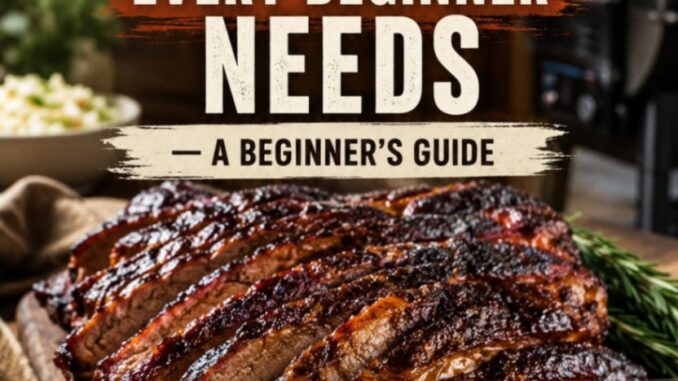
Pellet Smoker vs. Charcoal Smoker Compared — A Beginner’s Guide
There is a moment early in every barbecue journey where you find yourself standing at a crossroads. On one side, you have the ancient, tactile, hands-on tradition of burning wood and coals to slow-cook meat over an open fire. On the other side, you have modern engineering: digital controllers, motorized augers, and compressed hardwood pellets that allow you to set a temperature and walk away for twelve hours.
Choosing your first smoker is one of the biggest decisions you will make as an outdoor cook. Get the right one, and you’ll spend your weekends effortlessly feeding friends and family tender brisket, fall-off-the-bone ribs, and perfectly smoked poultry. Get the wrong one, and your expensive new backyard addition might end up sitting under a dusty canvas cover, unused and forgotten.
The debate usually boils down to two heavyweights: Pellet Smokers and Charcoal Smokers. Both are capable of producing world-class barbecue, but they go about it in completely different ways, require vastly different skill sets, and appeal to totally different styles of cooking.
This comprehensive guide breaks down how both fuel types work, compares their strengths and weaknesses, and outlines clear guidelines to help you choose the ideal smoker for your lifestyle, budget, and taste buds.
What Is a Pellet Smoker and How Does It Work?
Often called “pellet grills,” pellet smokers represent the biggest technology-driven evolution in backyard barbecue in the past few decades. They run on electricity and burn food-grade wooden pellets made from compressed sawdust.
How it Operates:
-
The Hopper: You load hardwood pellets into a storage box on the side of the unit.
-
The Auger: An electric screw drive (the auger) feeds pellets from the hopper into a small combustion pot underneath the main cook chamber.
-
The Igniter & Fan: An electric heating element ignites the pellets while an internal fan blows air over the fire, creating heat and smoke.
-
Digital Control: A digital thermostat constantly monitors the internal temperature of the chamber and automatically speeds up or slows down the auger to feed more or fewer pellets as needed.
In short, a pellet smoker operates remarkably like an outdoor convection oven that happens to run on real wood fuel.
Key Characteristics:
-
Temperature Precision: You simply turn a dial or push a button to select your target heat (e.g., 225°F), and the machine holds that exact temperature automatically.
-
Convenience: Most modern pellet smokers come equipped with Wi-Fi connectivity (often dubbed “WiFIRE” or “Smart Control”), letting you monitor meat temperatures and adjust settings directly from your smartphone.
-
Mild Smoke Profile: Because pellets burn cleanly and efficiently, they produce a smooth, subtle, and balanced smoke flavor that rarely overpowers the food.
What Is a Charcoal Smoker and How Does It Work?
Charcoal smokers are the traditional, battle-tested standard of American barbecue. Whether shaped like a vertical drum, an offset barrel, a kettle, or a thick ceramic egg (Kamado), these smokers rely on burning lump charcoal or briquettes along with chunks of raw wood.
How it Operates:
-
The Firebox/Base: You light charcoal using a chimney starter or fire starter and place the burning coals into the bottom section of the unit.
-
Wood Flavor: You add chunks or chips of real hardwood (hickory, oak, apple, or mesquite) directly onto the glowing coals to produce flavor-rich smoke.
-
Airflow Management: You control the internal temperature manually by adjusting intake vents (dampers) at the bottom and exhaust vents at the top. Opening vents feeds oxygen to the fire to increase heat; dampening vents starves the fire of oxygen to bring temperatures down.
A charcoal smoker is an interactive tool that requires physical management, patience, and a solid understanding of fire control.
Key Characteristics:
-
Deep, Bold Flavor: Charcoal combined with real wood chunks produces that heavy, authentic, classical barbecue smoke profile and a deep smoke ring in the meat.
-
Hands-On Craft: Cooking on a charcoal unit is a craft. You are the fire master, adjusting dampers, monitoring airflow, and adding fuel manually over the course of a cook.
-
High-Heat Versatility: Many charcoal smokers can reach scorching temperatures (600°F to 700°F+), making them exceptional for direct searing, pizza baking, and high-heat roasting in addition to low-and-slow smoking.
Head-to-Head Comparison Guidelines
To decide which smoker fits your culinary ambitions, let’s compare them across five fundamental operational categories.
1. Ease of Use and Learning Curve
-
Pellet Smoker: Effortless. If you know how to operate a standard kitchen oven, you can operate a pellet smoker. You push a button, wait 10 to 15 minutes for it to preheat, and put your food on the grate. It eliminates the steep learning curve of barbecue, allowing beginners to cook amazing meals on day one.
-
Charcoal Smoker: Steep. Managing a live fire takes time to learn. You must learn how to light charcoal properly, maintain a clean-burning fire without producing bitter black smoke, and constantly fine-tune intake vents to maintain steady heat over six to twelve hours. A strong draft of wind or a drop in outdoor temperature will require manual intervention.
2. Flavor Profile and Smoke Intensity
-
Pellet Smoker: Subtle and Clean. Pellet smokers yield a delicate, woody flavor that enhances meat without overpowering it. It is almost impossible to over-smoke food on a pellet grill. However, die-hard pitmasters sometimes feel pellet smoke lacks the heavy, deep punch of traditional barbecue.
-
Charcoal Smoker: Rich, Bold, and Authentic. Charcoal smokers deliver the quintessential, robust pit-style barbecue flavor. The combination of charcoal embers and burning hardwood chunks releases complex aromatics that penetrate deeply into the meat, yielding a rich bark and a vibrant pink smoke ring.
3. Temperature Range and Versatility
-
Pellet Smoker: Focused on Low-to-Medium Heat. Pellet units excel between 180°F and 400°F. While some high-end models offer direct-flame sliding grates, most standard pellet smokers struggle to achieve a true high-heat sear for steaks or burgers.
-
Charcoal Smoker: Extreme Flexibility. A charcoal smoker (especially a ceramic Kamado-style or heavy kettle smoker) can comfortably hold 225°F for 16 hours or crank up to 700°F for searing ribeyes or baking Neapolitan pizza. If you want one single appliance to do both low-and-slow smoking and high-heat grilling, charcoal holds a clear advantage.
4. Reliability and Power Requirements
-
Pellet Smoker: Requires Electricity. Because it relies on motor-driven augers, glowing igniter rods, and digital fans, a pellet smoker must be plugged into an electrical outlet (or run off a portable power generator). If you suffer a power outage mid-cook, your smoker shuts down completely.
-
Charcoal Smoker: 100% Analog Reliability. Charcoal smokers require no electronics, fans, or outlets to function. They are mechanical marvels of steel, iron, or ceramic. You can take a charcoal kettle camping, tailgating, or use it during a neighborhood power outage without missing a beat.
5. Cleaning and Maintenance
-
Pellet Smoker: Requires Frequent Vacuuming. Wood pellets burn down to a fine ash that gets blown around the interior barrel by the convection fan. You must regularly lift out the heavy deflector plates and shop-vac ash out of the burn pot every few cooks to prevent ignition failures.
-
Charcoal Smoker: Simple Ash Removal. Charcoal produces a larger volume of ash, but most units feature dedicated ash catchers or removable drawers. You simply dump the cooled ashes into a metal bucket, scrape down the grates, and you are ready for the next session.
Guidelines for Choosing the Right Smoker for You
Still on the fence? Use these straightforward decision guidelines to determine which smoker aligns best with your daily routine and cooking style.
Choose a Pellet Smoker If:
-
Your Time Is Limited: You want to put a pork shoulder on the grill at midnight, go to sleep peacefully, and wake up to tender barbecue without waking up every two hours to check a fire.
-
You Prioritize Convenience: You love the idea of controlling your grill temperature, setting timer alerts, and monitoring probe temps from an app on your phone while watching a football game.
-
You Prefer a Balanced, Lighter Smoke Flavor: You want your food to taste noticeably kiss-of-wood smoky, but not like it was pulled out of a campfire.
-
You Want Consistent Results Fast: You want a reliable appliance that eliminates user error, fuel flare-ups, and temperature swings.
Choose a Charcoal Smoker If:
-
You Enjoy the Ritual of Fire Cooking: You view outdoor cooking as a hobby, a craft, and a relaxing weekend ritual rather than a chore. You enjoy building fires, managing airflow, and tending to the grates.
-
You Want Maximum Smoke Flavor: You crave that intense, rich, classic pit-barbecue profile with heavy bark and dramatic smoke rings.
-
You Need High-Heat Searing Capability: You want a single outdoor cooker that can smoke a brisket low and slow on Saturday, then sear thick steaks over roaring open coals on Sunday.
-
You Want a Budget-Friendly Entry Point: High-quality charcoal kettle smokers can be purchased for a fraction of the cost of an entry-level pellet grill, offering incredible value for beginners on a budget.
Final Thoughts
Neither smoker type is objectively superior to the other; they are simply tailored to different styles of backyard cooking.
If your goal is maximum convenience, precise control, and set-it-and-forget-it simplicity, a pellet smoker is worth every single penny. It takes the guesswork out of outdoor cooking and fits seamlessly into a busy schedule.
If your goal is deep, traditional smoke flavor, hands-on fire management, and versatile cooking ranges from smoking to high-heat searing, a charcoal smoker remains the undisputed king of the backyard pit.
Consider how you realistically spend your weekends, pick the tool that matches your lifestyle, and start practicing your craft. The best smoker is ultimately the one you find yourself using every week.
Leave a Reply