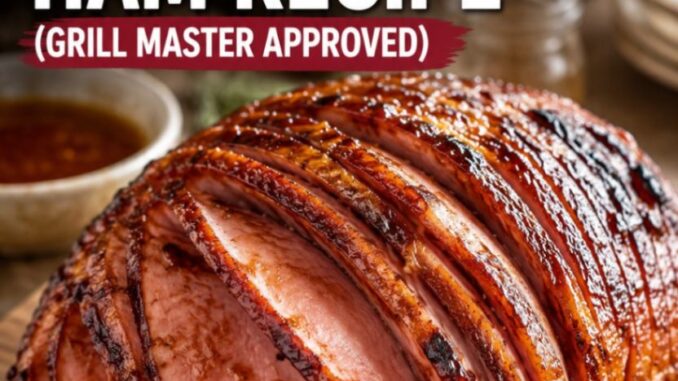
The Best Grilled Honey-Glazed Ham Recipe (Grill Master Approved)
If you have only ever baked a holiday ham in the oven, moving it out to the grill is going to completely change how you view main courses. The gentle kiss of smoke from hardwood coals, combined with a slow-drizzled honey glaze, creates a dark, caramelized outer crust that you simply cannot replicate inside a kitchen stove.
I’ve fired up my grill for holiday gatherings, Sunday family dinners, and summer block parties for over fifteen years, and this grilled honey-glazed ham recipe remains the single most requested centerpiece on my backyard menu. It requires very little active prep time, delivers incredible depth of flavor, and frees up your indoor oven for all your side dishes and desserts.
Why You’ll Love This Recipe
-
Unmatched Caramelization: Direct contact with gentle grill heat turns the honey glaze into a crisp, sticky crust without burning the natural sugars.
-
Frees Up Oven Space: Cooking the main dish outside leaves your kitchen oven completely open for casseroles, rolls, and pies.
-
Subtle Smoky Aroma: Even a quick two-hour turn on a charcoal or gas grill imparts a rich, savory aroma that takes pre-cooked ham to a whole new level.
-
Forgiving and Beginner-Friendly: Since city-style holiday hams come pre-cooked, your main focus is simply warming the meat through and building a rich glaze.
Ingredients
To make this recipe, you will need a handful of straightforward ingredients easily found at any local grocery store.
For the Ham
-
1 City Ham (7 to 9 lbs): Bone-in, fully cooked, spiral-cut or whole rump section. Bone-in holds moisture significantly better during indirect grilling.
-
1/2 cup Apple Juice or Hard Cider: Used in the drip pan to maintain moisture and create ambient steam under the grill hood.
For the Honey Glaze
-
3/4 cup Local Honey: Clover or wildflower honey works best. Darker honeys can turn bitter when exposed to direct heat.
-
1/2 cup Unsalted Butter: Melted, to carry fat-soluble flavors and help the glaze stick to the meat.
-
1/2 cup Light Brown Sugar: Packed. Adds depth and aids in the rapid formation of a sticky outer lacquer.
-
2 tablespoons Dijon Mustard: The acidity cuts through the heavy sweetness of the honey and balances the salt in the cured pork.
-
1/4 teaspoon Ground Cloves: A classic warm spice accent that brings traditional aroma.
-
1/4 teaspoon Smoked Paprika: Enhances the natural reddish hue and complements the grill’s wood smoke.
-
1/2 teaspoon Freshly Cracked Black Pepper: Adds a subtle back-end warmth.
Ingredient Substitutions
-
Honey Alternatives: Pure maple syrup makes a fantastic 1:1 substitute for honey if you prefer an earthy, fall-inspired profile.
-
Mustard Options: Whole-grain mustard adds great physical texture, while yellow mustard offers a sharper, tangy bite if Dijon isn’t in your pantry.
-
Spices: Ground ginger or a pinch of cinnamon can replace ground cloves if you want a lighter, fruitier spice profile.
Equipment Needed
-
Grill: A standard 22-inch kettle grill or a three-burner gas grill works perfectly.
-
Aluminum Foil Pan: Placed directly beneath the ham to catch dripping fat and prevent wild flare-ups.
-
Heavy-Duty Aluminum Foil: To wrap the ham loosely during the initial warming phase.
-
Silicone Basting Brush: Silicone resists heat and won’t drop bristles into your sticky glaze.
-
Meat Thermometer: An instant-read digital probe is essential for checking internal temperature accurately.
Step-by-Step Instructions
Step 1: Prep the Ham and Grill
Remove the ham from your refrigerator about 45 to 60 minutes before you plan to cook. Cold ham takes much longer to heat through to the bone, which often leads to dry outer layers.
Set up your grill for indirect two-zone cooking.
-
For a Gas Grill: Turn on the outer burners to medium-high heat and leave the center burner completely off. Aim for an ambient grill temperature of $325^\circ\text{F}$ to $350^\circ\text{F}$.
-
For a Charcoal Grill: Push white-hot coals to opposite sides of the lower grate, leaving a clear channel down the center. Drop an aluminum drip pan filled with $1/2$ cup of apple juice right into that middle space.
Step 2: Initial Warming Phase
Score the outer rind of the ham in a crosshatch pattern (1-inch diamonds) if it isn’t pre-sliced. This allows heat and glaze to penetrate deeper into the fat layer.
Place the ham cut-side down on a sheet of heavy-duty foil shaped into a shallow boat, then set it directly over the indirect heat zone (above the drip pan). Close the grill lid. Let the ham warm gradually for roughly 12 to 15 minutes per pound.
Step 3: Mix the Honey Glaze
While the ham warms, combine the honey, melted butter, brown sugar, Dijon mustard, ground cloves, smoked paprika, and black pepper in a small saucepan over low stove heat. Stir continuously for 3 to 5 minutes until the sugar fully dissolves into a smooth, glossy liquid. Remove from heat and set aside near the grill.
Step 4: Apply the Glaze
When the ham’s internal temperature hits $120^\circ\text{F}$ (usually after about 1 to 1.5 hours), peel back any foil covering the sides.
Generously brush the warm honey glaze over every inch of the ham, letting it run down into the diamond cuts or between the spiral slices. Close the lid and let it cook for 10 minutes. Repeat this process two to three times, applying a fresh layer of glaze every 10 minutes until a rich, mahogany lacquer forms.
Step 5: Check Doneness and Rest
Check the deepest part of the ham with your instant-read thermometer, taking care not to touch the bone. Once it registers $140^\circ\text{F}$, carefully remove the ham from the grill using sturdy heat-resistant gloves or large spatulas.
Transfer the ham to a carving board, tent it loosely with foil, and allow it to rest for at least 15 to 20 minutes before slicing.
Expert Tips
-
Control the Heat: High heat is the enemy of sugar. Keep your grill hood closed and maintain ambient temperatures around $325^\circ\text{F}$. If your grill runs too hot, the honey in the glaze will char to an unpleasant black bitter crust rather than a golden lacquer.
-
Protect the Cut Side: Always place spiral-sliced hams cut-side down on foil or a small tray. Leaving sliced meat exposed directly to circulating warm air will dry out the slices long before the center gets warm.
-
Save the Bone: Once carved, keep the ham bone in the freezer. It makes an incredible base for split pea soup, navy bean stew, or pot-simmered greens later on.
Common Mistakes to Avoid
-
Glazing Too Early: Applying sweet glaze at the beginning of the cook is the most common error. The sugar will scorch after 20 minutes over heat. Wait until the final 30 minutes of cooking time when the ham is already thoroughly warmed.
-
Direct Heat Cooking: Never place a large ham directly over active flames or hot coals. The fat will render quickly, creating uncontrollable flare-ups that scorch the outside while leaving the interior cold.
-
Skipping the Rest Period: Slicing immediately out of the grill causes natural juices to spill out onto the cutting board, leaving you with dry meat. Resting allows the juices to redistribute evenly throughout the protein.
Storage
-
Refrigeration: Store leftover carved ham in airtight containers or wrap tightly in foil. It keeps fresh in the refrigerator for up to 4 days.
-
Freezing: Wrap individual portions in plastic wrap, then seal them inside freezer-safe zip bags. Properly frozen ham retains excellent texture and flavor for up to 3 months. Thaw frozen ham overnight in the refrigerator before reheating.
Reheating
-
Oven Method: Place sliced leftovers in a baking dish, splash 2 tablespoons of water or broth over the meat, cover tightly with foil, and heat at $325^\circ\text{F}$ for 12 to 15 minutes until warm.
-
Skillet Method: Sear individual slices in a skillet over medium heat with a tiny pat of butter for 2 to 3 minutes per side. This re-caramelizes the glaze edges beautifully for breakfast sandwiches.
Nutrition Information (Estimated)
Servings: 12 to 16
| Nutrient | Amount per Serving |
| Calories | 380 kcal |
| Protein | 28 g |
| Total Fat | 18 g |
| Saturated Fat | 7 g |
| Carbohydrates | 24 g |
| Sugars | 22 g |
| Sodium | 1280 mg |
Note: Nutritional values are estimates based on an 8-lb bone-in cured city ham cooked with the complete glaze recipe.
Leave a Reply