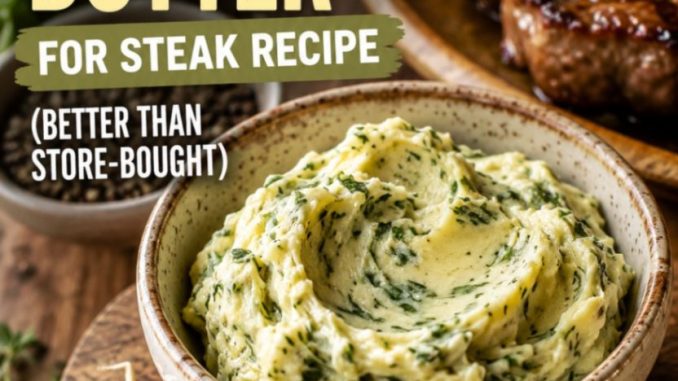
Homemade Garlic Herb Butter for Steak (Better Than Store-Bought)
There is a distinct moment when a good steak transitions from merely satisfying to downright extraordinary. It usually happens right after the meat comes off the heat. While the steak rests on the cutting board, a slice of cold, aromatic compound butter is placed directly on top. As the heat from the crust melts the butter, garlic, fresh herbs, and rich dairy fat pool together, mixing with the resting juices to form an effortless, glossy pan sauce.
While store-bought flavored putters exist in the dairy aisle, they rarely deliver that rich restaurant-quality taste. Commercially produced garlic butter often relies on low-grade butter bases, dehydrated herb dust, hydrogenated oils, and preserved garlic pastes that carry an unpleasant, sour bite. Making garlic herb butter from scratch at home requires basic ingredients and less than ten minutes of hands-on work, yet it delivers a depth of flavor that mass-produced alternatives simply cannot match.
Here is everything you need to know about crafting exceptional homemade garlic herb butter, why ingredient choices matter, and how to apply it to your favorite cuts of beef.
Why Homemade Garlic Herb Butter Outperforms Store-Bought Options
Understanding what happens inside commercial tubs of flavored butter explains why home preparation yields superior results. Food manufacturers design products for shelf stability, cost efficiency, and long shipping cycles, which often compromises flavor and texture.
-
Superior Fat Content and Butter Quality: Commercial compound putters frequently use standard, high-moisture butter with an 80% butterfat ratio—or worse, margarine blends. European-style and cultured high-fat putters feature an 82% to 84% butterfat content, resulting in a creamier mouthfeel, lower water content, and a richer coat over the steak.
-
Potency of Fresh Aromatics: Store-bought spreads rely on dried herbs and garlic powder or garlic extract. Dehydrated herbs lose their volatile aromatic oils over time, leaving behind a dull, earthy taste. Freshly chopped herbs release active oils that pierce through the heavy richness of beef fat.
-
Absence of Preservatives and Water Fillers: Pre-packaged spreads often include preservatives, emulsifiers, and added water to maintain stability at room temperature or extend shelf life. Pure homemade butter contains only dairy, fresh produce, and salt, eliminating synthetic aftertastes.
-
Complete Flavor Control: Homemade preparation allows you to adjust salt levels, customize herb combinations, and control the sharpness of the garlic to complement specific cuts of meat, whether you are cooking a lean filet mignon or a heavily marbled ribeye.
Key Ingredients for the Ultimate Garlic Herb Butter
Because compound butter contains so few elements, every ingredient plays a vital role. Quality selection here directly influences the final taste of your steak.
High-Fat Butter (Unsalted)
Always start with unsalted butter. Different salt brands and batches contain varying sodium levels, so using unsalted butter gives you total control over the seasoning. Look for European-style or grass-fed butter varieties. European butter undergoes a light culturing process that adds a subtle tang, while its higher fat ratio ensures a silkier melt over hot meat.
Fresh Garlic
Freshness is non-negotiable. Avoid pre-minced jarred garlic, which is packed in citric acid and lacks the pungent, sweet aromatics of a fresh bulb. Microplaning or grating the garlic into a fine paste ensures it blends evenly throughout the butter, preventing harsh chunks of raw garlic when taking a bite.
Fresh Flat-Leaf Parsley
Flat-leaf Italian parsley provides brightness, color, and a fresh, grassy counterpoint to the heavy fats in the beef and butter. Chop it finely so it disperses evenly without creating a leafy texture.
Fresh Rosemary and Thyme
Rosemary and thyme are classic steakhouse aromatics. Rosemary offers piney, resinous undertones that hold up well against charcoal and cast-iron sears. Thyme contributes subtle earthy and floral notes. Remove the woody stems entirely before chopping, as tough stem bits degrade the smooth texture of the butter.
Coarse Sea Salt or Kosher Salt
Salt is what pulls the aromatics together. Kosher salt or medium-grain sea salt dissolves cleanly into the fat while enhancing the savory notes of the garlic and herbs. Flaky finishing salt can also be added at the end for crunch.
Optional Flavor Enhancers
-
Fresh Lemon Juice or Zest: A teaspoon of lemon juice or a pinch of zest adds acid, cutting through the richness of the beef fat and brightening the overall profile.
-
Worcestershire Sauce: A few drops introduce umami, strengthening the savory character of cooked beef.
-
Cracked Black Pepper: Coarsely ground black pepper adds a mild, woody heat that complements grilled crusts.
Step-by-Step Preparation Guide
Making compound butter is straightforward, but attention to technique ensures the fat properly absorbs the liquid and solid ingredients without separating.
1. Properly Soften the Butter
Leave your unsalted butter on the counter for 40 to 60 minutes until it reaches room temperature. It should yield easily to gentle pressure from a finger without melting into liquid. Avoid using a microwave to soften the butter; uneven heating melts portions into liquid fat, breaking the emulsion and preventing the butter from holding a firm shape later.
2. Prepare the Aromatics
Mince your fresh parsley, rosemary, and thyme as finely as possible using a sharp chef’s knife. A dull knife crushes herbs, bruising the leaves and causing them to turn black. Microplane two to three cloves of fresh garlic to form a smooth paste, ensuring the garlic flavor distributes evenly without leaving raw bite-sized pieces behind.
3. Combine and Emulsify
Place the softened butter in a medium mixing bowl. Add the microplaned garlic, chopped herbs, salt, black pepper, and optional liquids like lemon juice or Worcestershire sauce. Using a rubber spatula or a fork, whip and fold the ingredients together until completely integrated. Ensure all liquids are fully emulsified into the butter fat rather than sitting on top.
4. Shape and Chill the Butter Log
Layout a sheet of parchment paper or plastic wrap on your counter. Transfer the mixed butter onto the center of the sheet, shaping it into a rough horizontal log. Fold the top edge of the paper or wrap over the butter. Using a straight edge, such as a bench scraper or small baking sheet, press against the base of the butter log while pulling the bottom layer of paper toward you. This tightens the log into a uniform cylinder.
Twist the ends of the paper firmly to seal, then place the roll in the refrigerator for at least two hours to firm up.
Master Recipe: Classic Garlic Herb Compound Butter
Ingredients:
-
8 oz (1 cup) Unsalted European-style butter, softened to room temperature
-
3 cloves Fresh garlic, microplaned or grated into a paste
-
2 tablespoons Fresh flat-leaf parsley, finely chopped
-
1 tablespoon Fresh thyme leaves, finely chopped
-
1 teaspoon Fresh rosemary, finely chopped
-
1 teaspoon Fine kosher salt or coarse sea salt
-
1/2 teaspoon Freshly cracked black pepper
-
1/2 teaspoon Fresh lemon juice (optional)
Instructions:
-
Combine the softened butter, garlic paste, parsley, thyme, rosemary, salt, black pepper, and lemon juice in a bowl.
-
Mix thoroughly with a flexible spatula until smooth and uniform.
-
Spoon the butter mixture onto parchment paper and roll into a 1.5-inch thick log.
-
Twist the parchment paper ends to seal tightly.
-
Refrigerate for at least 2 hours before slicing into rounds.
Professional Tips for Applying Compound Butter to Steak
Having high-quality butter prepared is only half the process; application timing is equally important to maximize flavor and texture.
-
Top Meat During the Resting Phase: Never add cold compound butter to a steak while it is actively searing in a hot pan or over an open flame, as the milk solids will burn and turn bitter. Instead, slice a 1/2-inch disc of compound butter and set it atop the steak immediately after removing the meat from the heat source. As the steak rests for 5 to 10 minutes, the heat melts the butter slowly, allowing the herbs and garlic to blend with the natural meat juices.
-
Pan-Basting (Arrosé Technique): If you are cooking a thick-cut steak in a heavy cast-iron skillet, you can drop a slice of garlic herb butter into the pan during the final 60 seconds of cooking. Tilt the pan slightly toward you and use a large spoon to continuously scoop the hot, foaming butter over the top of the steak. This basting process deepens the crust and cooks the aromatics rapidly without scorching them.
-
Storage and Shelf Life: Homemade compound butter stores exceptionally well. Kept in an airtight wrap, it remains fresh in the refrigerator for up to two weeks. For longer storage, freeze the log for up to six months. Slice off individual discs as needed directly from the freezer; they melt quickly when placed on top of hot, freshly cooked steaks.
Custom Flavor Variations to Match Different Cuts
While classic garlic, parsley, thyme, and rosemary work well with almost any steak, adjusting the herb profile can complement specific cuts of beef.
-
Smoked Paprika and Chives (Best for Ribeye): Ribeyes contain high levels of intramuscle fat. Adding a dash of smoked paprika and finely chopped chives provides a subtle smokiness and crisp onion bite that cuts through heavy fat.
-
Blue Cheese and Roasted Garlic (Best for Filet Mignon): Lean cuts like filet mignon benefit from additional moisture and strong flavors. Replacing raw garlic with soft, sweet roasted garlic cloves and folding in crumbled blue cheese creates a rich, savory coating for tender beef.
-
Shallot and Tarragon (Best for New York Strip): Finely minced French shallots cooked gently in butter alongside fresh tarragon add subtle anise and mild onion notes, offering a classic French bistro profile for New York strip steaks.
Making garlic herb butter at home requires minimal effort, simple ingredients, and basic kitchen tools, making it one of the easiest ways to elevate home-cooked steak to steakhouse quality.
Leave a Reply