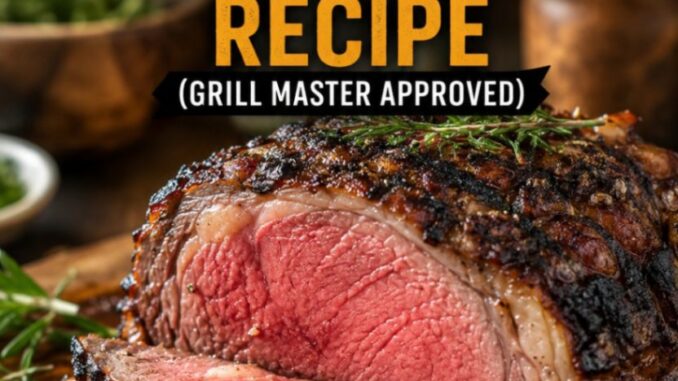
The Best Grilled Prime Rib Recipe (Grill Master Approved)
There is something undeniably special about firing up the grill for a whole standing rib roast. For years, most folks reserved prime rib for Christmas dinner, tucked safely inside a conventional oven. But once you cook a roast over live heat with a whisper of hardwood smoke, you will never look back. Getting that deep, mahogany crust on the outside while keeping the center tender and medium-rare is easier than you think, provided you know how to manage your fire.
If you have been intimidated by the price tag of a bone-in rib roast, take a deep breath. This grilled prime rib recipe walks you through every single step—from picking the right cut at the meat counter to carving clean, juicy slices at the table. Grab an apron, light the grill, and let’s turn a great piece of beef into something truly unforgettable.
Why You’ll Love This Recipe
-
Unbeatable Smokiness: Gas or charcoal, outdoor cooking adds a subtle richness that a standard kitchen oven simply cannot replicate.
-
Foolproof Temperature Control: Utilizing a simple two-zone cooking strategy ensures your roast cooks evenly from edge to edge without a thick band of gray, overcooked meat.
-
Incredible Crust: The direct-heat searing method creates a salty, herb-crusted exterior that locks in moisture and punches up every single bite.
-
Hands-Off Cooking: Once your grill heat stabilizes and the meat goes on, you have plenty of time to focus on side dishes, drinks, or spending time with family.
Ingredients
To make this recipe shine, stick with simple, high-quality ingredients. You do not need complex marinades or artificial tenderizers when dealing with a high-end cut of beef.
-
Standing Rib Roast (Bone-In): A 3-to-4-bone roast (roughly 7 to 8 pounds), trimmed and tied. Look for USDA Choice or Prime with generous white specks of marbling throughout the meat.
-
Coarse Kosher Salt: 2 tablespoons. Salt breaks down muscle proteins and draws moisture outward before reabsorbing, seasoning the roast deeply.
-
Freshly Cracked Black Pepper: 1 tablespoon. Medium-to-coarse grind provides a bite that holds up against rich beef fat.
-
Fresh Garlic: 6 cloves, finely minced or pasted.
-
Fresh Rosemary: 2 tablespoons, chopped fine.
-
Fresh Thyme: 2 tablespoons, chopped fine.
-
Olive Oil: 3 tablespoons. Acts as a binder for the herbs and aids in heat transfer for a dark crust.
Ingredient Substitutions
-
Kosher Salt: If using fine table salt instead of coarse kosher salt, cut the measurement in half. Table salt grains are significantly smaller and denser, meaning a full two tablespoons will make your roast far too salty.
-
Fresh Herbs: Dried herbs work in a pinch, but reduce the quantity to 1 teaspoon each of dried rosemary and dried thyme. Fresh herbs deliver brighter oils that withstand high grill temperatures without scorching into bitter flavors.
-
Binder Base: Yellow mustard or horseradish can replace olive oil if you want a sharper flavor profile on the outer crust.
Equipment Needed
-
Grill: A standard charcoal kettle, large gas grill, or pellet smoker capable of maintaining 225 degrees celcius to 250 degrees celcius indirect heat.
-
Meat Thermometer: A leave-in digital probe thermometer is essential. Relying on cooking time per pound is the fastest way to overcook expensive beef.
-
Kitchen Twine: Cotton butcher’s twine to secure the meat to the bones for uniform shape and even cooking.
-
Hardwood Flavo-Chips or Chunks: Pecan, oak, or hickory wood chips (soaked if using charcoal) add a warm woodsmoke accent without overpowering the natural beef flavor.
-
Carving Board: A large wooden cutting board with a deep juice groove to catch running liquids.
Step-by-Step Instructions
Step 1: Trim and Tie the Roast
Remove the prime rib from its vacuum packaging and pat it dry with paper towels. Inspect the fat cap on top. You want a layer roughly 1/4-inch thick; anything thicker will prevent the salt and herbs from penetrating into the meat. If your butcher hasn’t already done so, run cotton kitchen twine between each bone section, tying firm knots around the body of the roast. Tying holds the outer cap tightly against the eye of the rib eye, ensuring every slice cooks at the exact same rate.
Step 2: The Salt Dry-Brine (12 to 24 Hours Ahead)
Generously coat all sides of the roast with coarse kosher salt. Place the seasoned meat on a wire rack set inside a sheet pan and transfer it uncovered to your refrigerator for at least 12 hours (24 hours is ideal).
Why this step matters: Cold refrigerator air dries out the exterior surface of the meat. Dry beef skin sears instantly on a hot grill, yielding a crispy crust rather than steaming in its own condensation. Simultaneously, the salt dissolves, penetrates the interior fibers, and seasons the center of the roast.
Step 3: Apply the Herb Paste
Two hours before you intend to cook, pull the roast out of the fridge to take the chill off. In a small bowl, combine the olive oil, cracked black pepper, minced garlic, chopped rosemary, and chopped thyme into a thick paste. Slather this paste evenly across every surface of the roast.
Step 4: Set Up Two-Zone Heat on Your Grill
Prepare your grill for indirect cooking at 225 degrees celcius
For a Charcoal Grill: Push lit coals entirely to one side of the kettle. Place a drip pan filled with an inch of warm water on the unlit side. Add a couple of hardwood chunks to the embers.
-
For a Gas Grill: Turn on one burner to medium-low and leave the remaining burners off. Place your roast over the unlit side.
-
For a Pellet Grill: Set the system temperature to 225 degrees celcius with your preferred wood pellets.
Step 5: The Slow Cook (Indirect Heat)
Place the prime rib on the cool side of the grill, bone-side down. The bones act as a natural heat shield, protecting the delicate center meat from hot spots below. Insert your leave-in thermometer probe straight into the thickest part of the meat, making sure the metal tip does not touch bone or heavy fat pockets.
Close the lid and keep your grill temp steady around 225 degrees celcius. Expect this step to take roughly 3 to 4 hours, or about 20 to 22 minutes per pound.
Step 6: Monitoring Doneness Targets
Remove the roast from indirect heat when your probe registers approximately 10 degrees below your final target temperature:
| Target Doneness | Pull Temp off Grill | Final Temperature After Rest |
| Rare | 115 degrees celcius | 125degrees celcius |
| Medium-Rare | 125 degrees celcius | 135 degrees celcius |
| Medium | 135 degrees celcius |
145 degrees celcius |
Step 7: Reverse Sear for the Ultimate Crust
Once your meat hits the pull temperature 125 degrees celcius for medium-rare), move the roast directly over high heat or stoke your coals hot. Turn the roast every 45 to 60 seconds for a total of 3 to 5 minutes, allowing the flame to sear the herb paste into a dark, fragrant crust. Keep a close eye during this stage; dripping fat can cause flare-ups that scorch the garlic.
Step 8: The Essential Rest
Transfer the seared roast to a warm carving board. Tent loosely with a piece of aluminum foil. Let the prime rib rest unmolested for at least 20 to 30 minutes.
Why resting is non-negotiable: During cooking, muscle fibers contract and squeeze juices toward the center of the roast. Letting the meat rest allows those fibers to relax and reabsorb moisture evenly. If you cut into the meat immediately, all those delicious juices will spill onto your board, leaving you with dry beef.
Step 9: Carving and Serving
Snip the butcher’s twine with kitchen shears. Insert a long chef’s knife along the curve of the rib bones to separate the entire rack of bones from the main roast in one clean motion. Set the bones aside (they make fantastic snack ribs or beef stock base). Slice the boneless roast crosswise into thick, luxurious slabs, serving immediately with warm au jus or fresh horseradish cream.
Expert Tips
-
Buy Bone-In: Bones act as insulators, slowing down heat transfer so the meat right next to the bone stays juicy.
-
Look for Tight Grain: Choose a roast where the fat cap is uniform and white. Yellowish fat indicates an older animal, which can taste gamier.
-
Use a Water Pan: Placing a pan of water on the unlit side of your grill stabilizes internal grill temperatures and keeps the ambient air humid, preventing the outer edges of the meat from drying out.
Common Mistakes to Avoid
-
Cooking Straight from the Fridge: Throwing a ice-cold 8-pound roast onto a warm grill leads to uneven cooking—the outside overcooks into a gray band before the center ever warm up. Always give the meat 1 to 2 hours at room temperature before grilling.
-
Relying on Time Over Internal Temperature: Factors like ambient outdoor temperature, wind, and grill ventilation affect cook times dramatically. Never trust a timer; trust your digital thermometer.
-
Piercing the Meat Repeatedly: Avoid using a hand-held probe to stab the roast every ten minutes. Every puncture creates an escape route for trapped moisture. Use a leave-in probe that stays put until carving.
Storage
-
Refrigeration: Store cooled leftover prime rib tightly wrapped in plastic wrap or sealed in an airtight container for up to 4 days.
-
Freezing: Wrap individual slices in foil, then seal inside a heavy-duty freezer bag for up to 3 months. Thaw overnight in the refrigerator before reheating.
Reheating
Reheating prime rib without overcooking medium-rare beef takes patience.
-
Preheat your kitchen oven to $250^\circ\text{F}$.
-
Place slices of leftover prime rib in a baking dish with 2 tablespoons of beef broth or leftover au jus.
-
Cover the dish tightly with aluminum foil to trap moisture.
-
Warm for 10 to 15 minutes until the center reaches $120^\circ\text{F}$.
Avoid the microwave at all costs—it turns tender beef rubbery and cooks out all remaining pinkness.
Nutrition Information (Estimated)
Servings: 8 | Serving Size: ~6 oz carved slice
| Nutrient | Amount per Serving |
| Calories | 580 kcal |
| Total Fat | 44 g |
| Saturated Fat | 18 g |
| Cholesterol | 135 mg |
| Sodium | 620 mg |
| Carbohydrates | 1 g |
| Protein | 43 g |
Leave a Reply