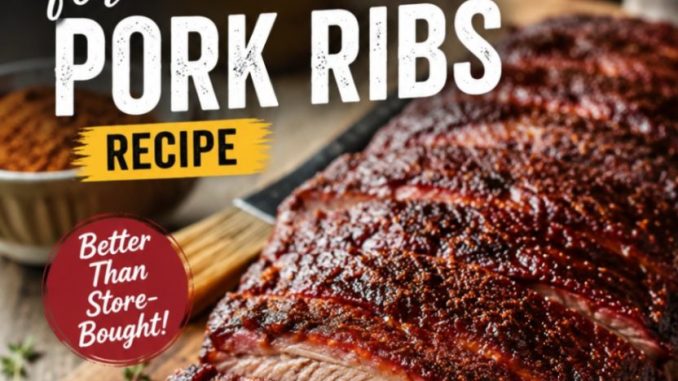
There is something deeply satisfying about pulling a rack of tender, smoky pork ribs off the smoker or grill, cutting into them, and seeing a dark, beautiful crust holding in all the juices. That crust, known in the barbecue world as the “bark,” is not created by luck or fancy equipment. It is created by a well-balanced dry rub.
While spice aisles in grocery stores are packed with colorful bottles claiming to hold the secret to championship BBQ, most store-bought dry rubs fall disappointing short. They are frequently loaded with excess salt, artificial anti-caking chemicals, silicon dioxide, and cheap fillers designed to extend shelf life rather than build flavor. Worse yet, because ground spices lose their volatile oils over time, those pre-packaged bottles may have been sitting on a warehouse shelf for months before reaching your kitchen.
Creating your own homemade pork rib dry rub gives you complete control over flavor, salt content, heat level, and freshness. Once you understand the basic ratios and how individual spices interact with heat and fat, you will never buy a bottled rub again.
Here is the complete guide to understanding, crafting, and applying the ultimate homemade dry rub for pork ribs.
The Five Pillars of a Superior Pork Rub
Pork is a naturally mild, rich meat that pairs exceptionally well with bold, contrasting flavors. To craft a dry rub that enhances the meat rather than overpowering it, you need to balance five core flavor components:
-
Sweetness: Pork and sugar are natural allies. Sugar provides an initial hit of sweetness that contrasts with the rich fat of pork ribs. More importantly, sugar caramelizes under heat, creating the signature dark, sticky bark that barbecue enthusiasts crave.
-
Salt: Salt is the primary flavor enhancer. It penetrates deep into the meat fibers, seasoning the pork throughout while helping it retain moisture during long cooks.
-
Smokiness and Warmth: Spices like paprika, chili powder, and cumin provide warmth, depth, and rich red color. Smoked paprika, in particular, adds an appealing wood-smoked note even before the ribs hit the grate.
-
Savory Umami: Garlic, onion, and dried herbs ground the sweet and spicy notes with deep, earthy savoriness.
-
Heat: A touch of heat cuts through the richness of pork fat. It should not be overwhelming; rather, it should linger gently at the back of the throat after each bite.
The Ultimate Homemade Pork Rib Dry Rub Recipe
This recipe balances classic Memphis-style savory notes with a touch of Kansas City sweetness. It yields enough rub for four to five full racks of baby back or St. Louis-style ribs and can easily be doubled or tripled.
Ingredients List:
-
1/2 cup Dark Brown Sugar (packed)
-
1/4 cup Kosher Salt (coarse grain, such as Morton or Diamond Crystal)
-
1/4 cup Smoked Paprika
-
2 tablespoons Garlic Powder
-
2 tablespoons Onion Powder
-
1 tablespoon Freshly Cracked Black Pepper (medium grind)
-
1 tablespoon Chili Powder
-
1 tablespoon Ground Mustard
-
1 teaspoon Cayenne Pepper (adjust to taste)
-
1 teaspoon Dried Oregano (rubbed fine)
-
1/2 teaspoon Ground Cumin
Understanding the Role of Each Ingredient
To truly master barbecue, it helps to understand why each ingredient earns a spot in the bowl:
-
Dark Brown Sugar: Dark brown sugar contains more molasses than light brown sugar, offering a deeper caramel flavor and a higher moisture content that helps spices stick to the raw meat.
-
Kosher Salt: Always use coarse kosher salt rather than fine table salt. Table salt grains are much smaller and denser, meaning a tablespoon of table salt will be nearly twice as salty as a tablespoon of kosher salt, leading to over-seasoned ribs.
-
Smoked Paprika: Made from oak-smoked red peppers, this gives the rub its deep crimson color and signature smoke aroma without adding harsh bitterness.
-
Garlic and Onion Powder: These two ingredients provide the aromatic foundation. Use granulated or powdered forms rather than garlic or onion salt to avoid unbalancing your overall salt ratio.
-
Ground Mustard: Dry mustard powder contains sinigrin, a compound that breaks down into sharp, tangy notes. It acts as a natural flavor bridge between the sweet sugar and heavy pork fat.
-
Black Pepper: Freshly ground black pepper adds a distinct, sharp bite that differs from the lingering heat of red capsicum peppers.
-
Cayenne Pepper: This is where the heat comes from. A single teaspoon across a batch for four racks provides just enough warmth to balance the brown sugar without making the ribs spicy.
-
Cumin and Oregano: Used sparingly, cumin adds an earthy background note, while dried oregano provides a subtle herbal finish that rounds out the heavy spice profile.
Step-by-Step Instructions
Step 1: Prepare the Base
Place the dark brown sugar in a large glass or stainless steel mixing bowl. Because brown sugar naturally clumps due to its molasses content, use a fork or your fingers to break up every lump until the sugar is soft and uniform.
Step 2: Combine the Dry Spices
Add the kosher salt, smoked paprika, garlic powder, onion powder, black pepper, chili powder, ground mustard, cayenne pepper, oregano, and cumin to the bowl with the brown sugar.
Step 3: Whisk Thoroughly
Use a wire whisk to combine all ingredients until the mixture is uniform in color with no streaks of individual spices remaining. Take your time with this step; a poorly mixed rub leads to bites that are either too salty or overly sweet.
Step 4: Storage
Transfer the rub into an airtight container, such as a glass mason jar or a spice bottle with a tight-fitting lid. Store it in a cool, dark, and dry pantry away from direct sunlight or stove heat.
Note on Shelf Life: Because this rub contains brown sugar, it may compact over time. Simply break it up with a fork before use. Stored properly, the rub remains potent for up to six months.
How to Apply Dry Rub to Pork Ribs Like a Pro
Having a great dry rub recipe is only half the battle. How you prep the meat and apply the seasoning directly impacts the final flavor and texture.
1. Trim and Remove the Membrane
Before seasoning, prepare the rack. Turn the ribs bone-side up and locate the thin, translucent membrane (the silverskin) covering the bones. Work a butter knife under the membrane over one of the middle bones, grip it with a paper towel for traction, and peel it off in one smooth motion. Removing this membrane allows the seasoning to penetrate the underside of the rack and prevents a chewy texture.
2. To Bind or Not to Bind?
A binder is a thin layer of liquid applied to raw meat to help the dry rub adhere. Common binders include yellow mustard, olive oil, or apple cider vinegar.
-
Using Yellow Mustard: Applying a thin coat of plain yellow mustard across the rack will not make your ribs taste like mustard; the vinegar cooks off, leaving behind enzymes that help tenderize the surface while holding the rub in place.
-
Dry Application: If the meat has enough natural surface moisture after patting it light with paper towels, you can skip the binder entirely and apply the rub directly to the meat.
3. Use the Two-Handed Technique
Designate one hand as your “dirty hand” (handling the raw meat) and one hand as your “clean hand” (holding the rub container). This prevents cross-contamination and keeps your spice jar clean.
4. Season Contentiously, But Don’t Overpack
Apply the rub from roughly 12 inches above the ribs. Seasoning from a height ensures an even distribution across the surface rather than heavy patches in certain spots. Start with the bone side first, then flip and season the meat side generously, including the ends and edges.
Lightly pat the rub into the meat with your hand. Do not vigorously rub or scrub the spices into the flesh, as this can tear the muscle fibers and create an uneven surface layer.
5. Let the Meat “Sweat”
Once seasoned, let the ribs rest at room temperature for 30 to 45 minutes before putting them on the smoker or grill. During this resting phase, the salt draws out surface moisture from the pork, dissolving the sugar and spices into a rich paste. The rub will transform from a dry powder into a wet, glistening coating. This process ensures the rub sticks to the meat during cooking and lays the groundwork for a rich bark.
Crucial Tips for Cooking with a Sugar-Based Rub
While brown sugar is essential for building bark, it requires proper heat management during the cook:
-
Watch the Temperature: Sugar begins to caramelize around 320°F (160°C) and burns rapidly at temperatures above 350°F (175°C). Keep your smoker or oven temperature between 225°F and 275°F (107°C to 135°C) for low-and-slow cooking. This allows the sugar to slowly melt, blend with rendering pork fat, and form a deep mahogany bark without charring.
-
Manage Sauce Application: If you prefer wet, saucy ribs, hold off on applying barbecue sauce until the last 20 to 30 minutes of cooking. Because most barbecue sauces also contain high amounts of sugar, applying them too early will cause them to burn black and turn bitter.
Easy Flavor Variations to Try
Once you master this baseline formula, you can adjust the components to match your personal taste preference:
-
Memphis Dry-Style Variation: Omit the brown sugar entirely or reduce it to 1 tablespoon. Increase the smoked paprika to 1/3 cup and add 1 teaspoon of celery seed and 1 teaspoon of dried thyme.
-
Sweet Kansas City Variation: Double the brown sugar to 1 full cup and add 1 tablespoon of dark cocoa powder or espresso powder to add background richness.
-
Texas Heat Variation: Reduce the brown sugar to 1/4 cup, double the coarse black pepper, and add 1 tablespoon of crushed red pepper flakes or chipotle powder for a smoky, spicy kick.
Making your own pork rib dry rub takes less than ten minutes, costs a fraction of store-bought alternatives, and elevates your homemade barbecue significantly. Keep a jar ready in your pantry, and you will always be prepared to fire up the smoker.
Leave a Reply