The first brisket I ever smoked taught me an important lesson—good barbecue can’t be rushed. I kept lifting the smoker lid every half hour because I couldn’t wait to see what was happening. Every peek let the heat escape, stretched out the cook, and left me wondering why dinner was taking forever. These days, I know better. Once that brisket goes on the smoker, patience becomes one of the most important ingredients.
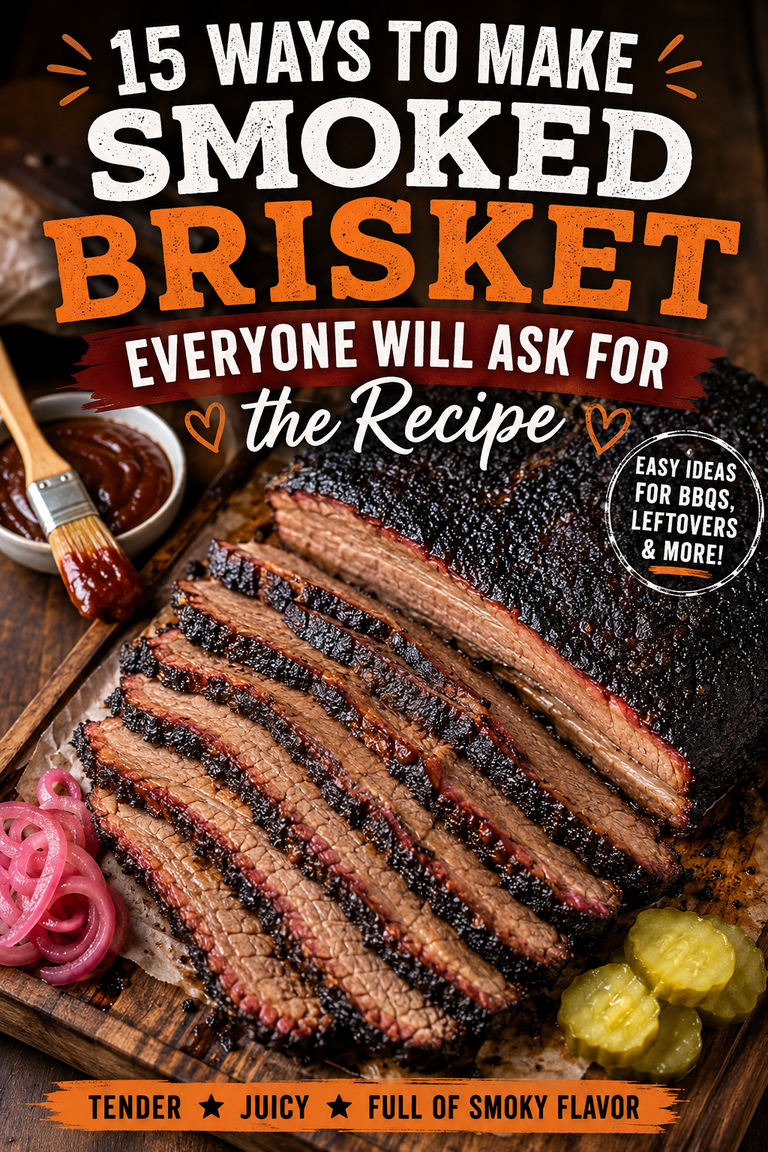
A well-made smoked brisket isn’t just another barbecue recipe. It’s the centerpiece of backyard cookouts, football weekends, family reunions, and holiday gatherings. When you slice into perfectly smoked brisket, you should see a beautiful smoke ring, a dark, flavorful bark, and juicy meat that practically melts in your mouth. The best part is that once you learn the basics, you can create dozens of different flavor combinations without changing the cooking process.
Whether you prefer classic Texas barbecue or something with a sweeter glaze or spicy finish, these fifteen ideas will help you make brisket that disappears fast—and almost always ends with someone asking, “Can I get your recipe?”
Why You’ll Love These Smoked Brisket Ideas
- Perfect for backyard BBQs, holidays, and family dinners.
- Beginner-friendly with plenty of practical advice.
- Fifteen delicious ways to customize one classic recipe.
- Great for feeding a crowd.
- Makes incredible leftovers for sandwiches, tacos, baked potatoes, and mac and cheese.
- Uses simple ingredients you can find in almost any grocery store.
- Includes expert tips to help you avoid dry or tough brisket.
Ingredients
For the Basic Smoked Brisket
- 1 whole packer brisket (12–15 pounds)
- 2 tablespoons yellow mustard (optional binder)
- ½ cup kosher salt
- ½ cup coarse black pepper
- 2 teaspoons garlic powder
- 2 teaspoons onion powder
- 1 teaspoon smoked paprika
For Spritzing
Choose one:
- Apple cider vinegar
- Apple juice
- Beef broth
Optional Finishing Ingredients
- Beef tallow
- Unsalted butter
- Your favorite barbecue sauce
- Fresh parsley
Ingredient Substitutions
One thing I’ve learned over the years is that brisket doesn’t need twenty different seasonings to taste amazing.
If you’re missing something, don’t panic.
- Coarse sea salt works just as well as kosher salt.
- Freshly cracked black pepper creates a much better bark than finely ground pepper.
- Beef broth can replace apple juice if you prefer a richer flavor.
- Regular paprika works if you don’t have smoked paprika.
- Melted butter can replace beef tallow after wrapping.
The quality of the beef and your cooking technique matter far more than an extra spice or two.
Equipment Needed
You don’t need a competition smoker to make excellent brisket.
Here’s what I recommend:
- Smoker or pellet grill
- Meat thermometer
- Instant-read thermometer
- Butcher paper or heavy-duty aluminum foil
- Large cutting board
- Sharp slicing knife
- Spray bottle
- Heat-resistant gloves
If you’re deciding where to spend your money, buy a reliable thermometer before upgrading your smoker. Temperature tells part of the story, but tenderness tells you when the brisket is truly finished.
How to Prepare the Brisket
Trim the Fat
Leave about ¼ inch of fat across the top.
It’s tempting to trim everything away, especially if you’re trying to make the brisket look neat, but that layer protects the meat during the long cook.
The first brisket I ever trimmed looked beautiful before it went into the smoker.
Unfortunately, it came out much drier than I expected because I’d removed almost all of the protective fat.
Season Generously
Brisket is a large cut of beef.
Don’t be shy with the seasoning.
Cover every side evenly so each slice has great flavor.
Let the Seasoning Sit
If you have time, season the brisket the night before.
Resting overnight allows the salt to begin working its way into the meat and helps the rub stick better during smoking.
1. Classic Texas Smoked Brisket
If you’ve never smoked a brisket before, this is where I’d start.
Texas-style brisket proves that you don’t need complicated rubs or sugary sauces to make unforgettable barbecue.
Salt, pepper, smoke, and patience are the real stars.
Why It Works
The simple seasoning lets the beef shine while creating the deep, peppery bark that Texas barbecue is known for.
Cooking Tip
Smoke at 225°F until the brisket reaches around 165°F, then wrap it in butcher paper and continue cooking until it’s probe tender, usually somewhere between 200°F and 205°F.
Don’t focus on the exact number.
I’ve had briskets become perfectly tender at 201°F and others that needed another hour before the probe slid in like warm butter.
Every brisket has its own schedule.
2. Garlic Butter Smoked Brisket
This version has become one of my family’s favorites.
After wrapping the brisket, brush it with melted butter mixed with fresh minced garlic.
The garlic softens during the final hours of cooking and adds richness without overpowering the natural beef flavor.
Serve it with roasted potatoes and grilled asparagus for a meal that feels just a little more special.
3. Coffee Rub Smoked Brisket
Coffee might sound unusual if you’ve never tried it on barbecue.
Don’t worry—you won’t taste a cup of coffee.
Instead, the coffee deepens the bark and balances the richness of the brisket.
Coffee Rub
- 2 tablespoons finely ground coffee
- 2 tablespoons brown sugar
- 1 tablespoon kosher salt
- 1 tablespoon coarse black pepper
- 2 teaspoons garlic powder
- 2 teaspoons smoked paprika
The sugar caramelizes while the coffee helps create an incredibly dark, flavorful crust.
4. Sweet and Spicy BBQ Smoked Brisket
Some guests always reach for barbecue with a little extra kick.
This version combines brown sugar, smoked paprika, chili powder, garlic powder, onion powder, and just enough cayenne pepper to warm things up without overwhelming the meat.
Brush on a thin layer of barbecue sauce during the last thirty minutes of cooking.
A light glaze is all you need.
Too much sauce softens the bark you’ve spent hours creating.
5. Smoked Brisket Burnt Ends
Ask any barbecue fan about their favorite bite, and there’s a good chance they’ll say burnt ends.
Separate the point from the flat after the brisket is finished cooking.
Cut the point into cubes, toss them with barbecue sauce and a spoonful of beef tallow, then return them to the smoker for another hour.
The outside becomes sticky and caramelized while the center stays unbelievably juicy.
I always make extra because they disappear long before dinner is served.
6. Pepper-Crusted Smoked Brisket
If you love bold bark, increase the amount of coarse black pepper.
Freshly cracked pepper creates a beautiful crust that complements the smoky beef without making the brisket overly spicy.
This is one of those recipes where simple ingredients produce impressive results.
7. Hickory Smoked Brisket
Changing the type of wood can completely change the personality of your barbecue.
Hickory produces a stronger smoke than oak and gives brisket a deep, traditional barbecue flavor.
If you’ve never cooked with hickory before, start with a moderate amount.
Too much heavy smoke can make brisket taste bitter instead of balanced.
8. Oak-Smoked Brisket
If I had to choose only one wood for brisket, I’d reach for oak every time.
It burns steadily, creates clean smoke, and lets the beef remain the star of the meal.
Whenever someone tells me my brisket tastes rich without being overpoweringly smoky, oak usually deserves part of the credit.
One final piece of advice before you close the smoker lid: resist the temptation to keep checking on the brisket.
I know it’s difficult.
The smell alone makes you curious.
But every time you open the lid, you lose heat and extend the cooking time. Trust your thermometer, trust your smoker, and let the brisket do its thing.
9. Texas-Style Salt and Pepper Smoked Brisket
If there’s one brisket recipe that proves less is more, it’s this one.
Texas pitmasters have trusted nothing more than coarse black pepper and kosher salt for generations, and there’s a reason it has stood the test of time. A well-marbled brisket already has incredible flavor. Your job is simply to help it shine.
When I buy Prime brisket, this is almost always the direction I go. It lets the quality of the beef take center stage.
Serving Suggestion
Serve with:
- Pickles
- White onion slices
- Jalapeños
- Texas toast
- Potato salad
Sometimes the simplest plate is the one people remember most.
10. Beer-Braised Smoked Brisket
Here’s a variation I started making after accidentally running low on beef broth one weekend.
Instead of broth, I poured a small splash of dark lager into the foil before wrapping the brisket.
The result was surprisingly good.
The beer doesn’t leave an obvious beer flavor. Instead, it helps create extra moisture and adds a subtle richness during the final hours of cooking.
Use only a small amount. You’re creating steam, not boiling the brisket.
11. Chipotle Smoked Brisket
For people who enjoy smoky heat, chipotle powder is hard to beat.
Unlike cayenne, chipotle brings both spice and additional smokiness.
I like mixing it into the dry rub with paprika, garlic powder, onion powder, black pepper, and brown sugar.
The brisket stays rich while picking up just enough heat to keep every bite interesting.
This version is fantastic in tacos the next day.
12. Herb Butter Smoked Brisket
Barbecue doesn’t always have to taste heavy.
Before wrapping, spread melted butter mixed with chopped rosemary, thyme, parsley, and garlic over the brisket.
The herbs soften as they cook and perfume the meat without hiding the smoky flavor.
I especially enjoy serving this version during the holidays alongside roasted vegetables and creamy mashed potatoes.
13. Smoked Brisket Sandwiches
Leftover brisket might be even better than fresh brisket.
Pile warm slices onto toasted brioche buns with:
- Sharp cheddar cheese
- Crispy fried onions
- Pickles
- Homemade barbecue sauce
One small trick I learned years ago is to avoid slicing the entire brisket at once.
Leave the remaining portion whole.
It stays noticeably juicier when reheated.
14. Smoked Brisket Tacos
These come together in less than fifteen minutes.
Warm corn tortillas, chopped brisket, diced onion, cilantro, fresh lime juice, and salsa create a completely different meal without feeling like leftovers.
If I have avocado or cotija cheese in the refrigerator, I’ll add those too.
It’s one of those dinners that somehow disappears faster than the original barbecue.
15. Smoked Brisket Mac and Cheese
This is comfort food that never disappoints.
Prepare your favorite homemade macaroni and cheese, then fold in chopped smoked brisket before baking.
Top with shredded cheddar and a light sprinkle of smoked paprika.
The creamy cheese balances the smoky beef perfectly.
Every bite has crispy edges, gooey cheese, and tender brisket.
If you’re feeding teenagers, don’t expect leftovers.
Expert Tips
After smoking more briskets than I can count, these are the lessons that consistently make the biggest difference.
Buy the Best Brisket You Can Afford
Good marbling means better flavor and a juicier finished brisket.
USDA Prime is wonderful if your budget allows, but Choice brisket can still turn out beautifully with proper cooking.
Don’t Cook by Temperature Alone
Many recipes tell you brisket is finished at 203°F.
Sometimes that’s true.
Sometimes it isn’t.
The thermometer gets you close, but tenderness tells you when it’s done.
When the probe slides into the meat with almost no resistance—like pushing into softened butter—it’s ready.
Rest Longer Than You Think
This may be the hardest part.
Everyone is hungry.
The brisket smells incredible.
Still, give it at least one hour to rest.
I’ve cut briskets too early before, and the juices ran all over the cutting board instead of staying inside the meat.
The difference after a proper rest is remarkable.
Common Mistakes to Avoid
Opening the Smoker Too Often
Every time the lid opens, heat escapes.
Try to trust your thermometer instead of your curiosity.
Wrapping Too Early
If you wrap before the bark has developed, you’ll end up with a softer exterior.
Wait until the bark is dark and firmly set.
Over-Trimming the Fat
Leave about one-quarter inch of fat.
Too little fat increases the chance of dry brisket.
Slicing with the Grain
Always slice against the grain.
It’s one of the easiest ways to make brisket noticeably more tender.
Storage
Allow leftover brisket to cool before refrigerating.
Store slices with a few spoonfuls of their cooking juices in an airtight container.
They’ll stay fresh for up to 4 days.
For longer storage, freeze tightly wrapped portions for up to 3 months.
Reheating
Skip the microwave whenever possible.
Instead:
- Place brisket in a baking dish.
- Add a splash of beef broth.
- Cover tightly with foil.
- Heat in a 300°F oven until warmed through.
The added moisture helps preserve the brisket’s tenderness.
Frequently Asked Questions
What is the best wood for smoked brisket?
Oak is my favorite because it produces clean, balanced smoke.
Hickory creates a stronger barbecue flavor, while pecan offers a slightly sweeter finish.
Should I wrap brisket?
Yes.
Wrapping helps retain moisture and move through the stall more efficiently.
I prefer butcher paper because it protects the bark while still allowing the brisket to breathe.
Why did my brisket turn out dry?
Common reasons include:
- Cooking too long
- Not cooking long enough
- Trimming away too much fat
- Slicing before resting
Can smoked brisket be made ahead?
Absolutely.
Many pitmasters believe brisket tastes even better the next day after the flavors have settled.
Estimated Nutrition Information
Per Serving
- Calories: 520
- Protein: 42g
- Fat: 36g
- Saturated Fat: 14g
- Carbohydrates: 4g
- Fiber: 1g
- Sugar: 2g
- Sodium: 780mg
Nutritional values are estimates and may vary depending on ingredients and serving size.
Recipe Card
Classic Smoked Brisket
Prep Time: 30 minutes
Cook Time: 12–14 hours
Rest Time: 1 hour
Total Time: Approximately 14–15 hours
Servings: 12–16
Ingredients
- 1 whole packer brisket
- Kosher salt
- Coarse black pepper
- Garlic powder
- Onion powder
- Smoked paprika
- Yellow mustard (optional)
Instructions
- Trim the brisket, leaving about ¼ inch of fat.
- Apply mustard if desired.
- Season generously on all sides.
- Smoke at 225°F until the internal temperature reaches about 165°F.
- Wrap tightly in butcher paper.
- Continue cooking until probe tender, around 200–205°F.
- Rest for at least one hour.
- Slice against the grain and serve.
Leave a Reply