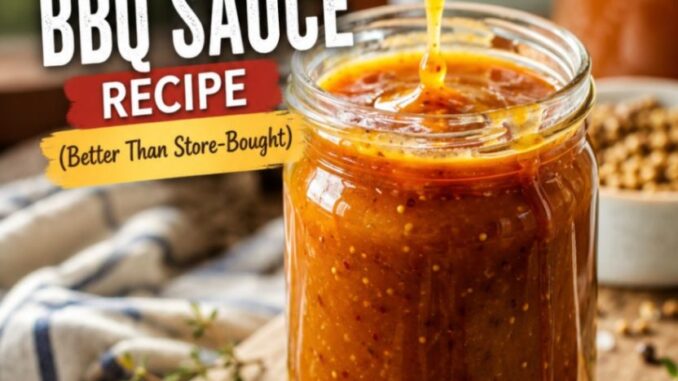
Homemade Honey Mustard BBQ Sauce Recipe (Better Than Store-Bought)
If you have ever stood in the condiment aisle staring at rows of glossy barbecue sauce bottles, you already know the struggle. Half of them are loaded with high fructose corn syrup, artificial smoke, and enough sodium to preserve a mummy. The other half promise “artisanal flavor” for eight dollars a bottle, only to taste like watery vinegar with a splash of yellow mustard.
Making your own barbecue sauce at home isn’t just about avoiding weird stabilizers and excessive sugar. It is about total control over flavor balance.
This specific recipe hits the legendary sweet spot of South Carolina-style mustard sauce combined with the sticky, smoky goodness of a classic Kansas City red sauce. It is sweet, tangy, rich, slightly smoky, and carries just enough quiet heat to wake up your palate. Once you taste this simmered over fresh garlic and real honey, you will officially banish store-bought bottles from your refrigerator door for good.
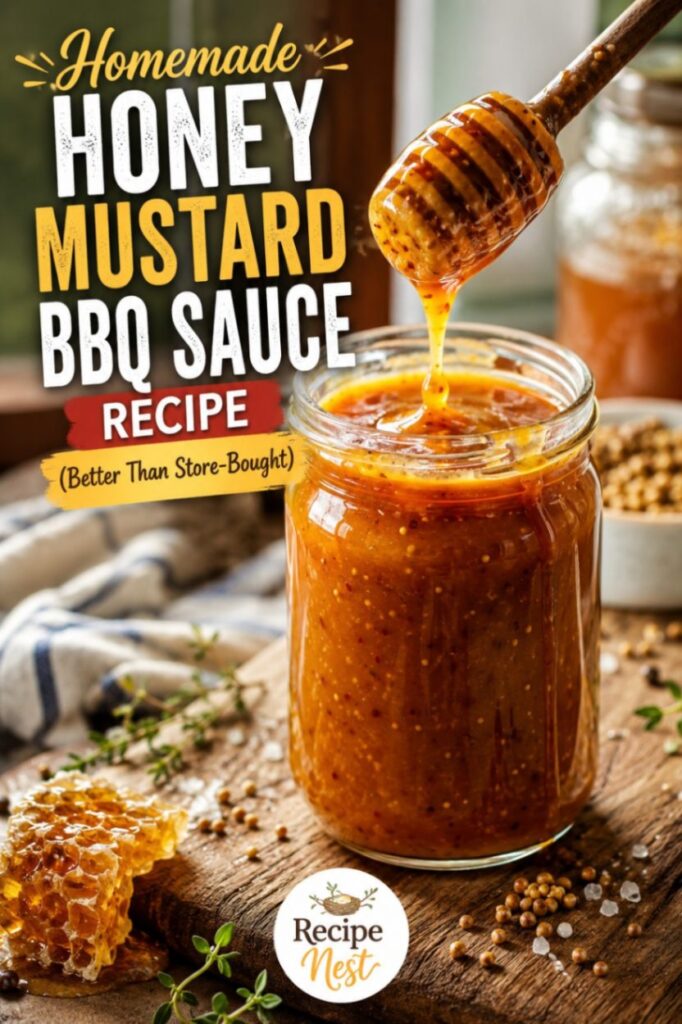
Why Honey Mustard BBQ Sauce Works So Well
The magic of a great honey mustard barbecue sauce lies in contrast.
Mustard provides a sharp, pungent acidity driven by compounds called isothiocyanates. On its own, raw mustard can be aggressive and harsh. Honey acts as its perfect natural counterweight—its complex, floral sweetness coats the tongue, softening the sharp bite of the mustard without hiding it entirely.
When you introduce traditional barbecue elements—tomato paste for deep umami, apple cider vinegar for bright acidity, liquid smoke for depth, and warm spices for complexity—you create a balanced, three-dimensional sauce. It hits all five basic taste sensations in a single bite.
Essential Ingredients & Why They Matter
To make a truly exceptional sauce, every ingredient in your saucepan needs to earn its keep. Here is what you will need and why each element plays a critical role.
The Base
-
Yellow Mustard (1 cup): This provides the bright, iconic yellow hue and classic tangy baseline. Standard American yellow mustard works best here because of its high vinegar content and smooth texture.
-
Dijon Mustard (1/4 cup): Adds a sophisticated, peppery kick and deeper mustard flavor to complement the straightforward yellow mustard.
-
Honey (1/2 cup): Use raw, high-quality liquid honey. It gives the sauce a glossy finish and a smooth, natural sweetness that caramelizes beautifully when exposed to heat on the grill.
The Flavor Builders
-
Apple Cider Vinegar (1/3 cup): Adds sharp, fruity acidity that cuts through fatty meats like pork shoulder and chicken thighs.
-
Dark Brown Sugar (1/4 cup, packed): Adds molasses notes that help create that sticky, finger-licking texture as the sauce cools.
-
Tomato Paste (2 tablespoons): Anchors the sauce, providing body, rich color, and a subtle savory depth that bridges the gap between mustard and traditional red BBQ sauce.
-
Worcestershire Sauce (1 tablespoon): A flavor powerhouse loaded with anchovies, tamarind, and garlic that adds essential umami.
The Spice Blend & Aromatics
-
Garlic Powder (1 teaspoon): Blends seamlessly into the liquid base without the risk of burning that fresh garlic carries during a simmer.
-
Onion Powder (1 teaspoon): Complements the garlic and adds savory roundness.
-
Smoked Paprika (1 teaspoon): Essential for that wood-fired flavor profile without relying too heavily on synthetic liquid smoke.
-
Cayenne Pepper (1/4 teaspoon to 1/2 teaspoon): Gives a tiny pulse of heat at the back of the throat to balance the rich honey. Adjust to taste.
-
Black Pepper (1/2 teaspoon) & Fine Sea Salt (1/2 teaspoon): Sharpens and unifies all the distinct flavors.
-
Hickory Liquid Smoke (1/2 teaspoon): Optional, but recommended if you are cooking indoors or want that authentic pitmaster aroma.
Step-by-Step Cooking Instructions
Making this sauce requires minimal prep and takes less than twenty minutes from counter to container.
Step 1: Combine the Liquids and Sugars
In a medium, heavy-bottomed saucepan, whisk together the yellow mustard, Dijon mustard, honey, apple cider vinegar, dark brown sugar, tomato paste, and Worcestershire sauce until completely smooth. Make sure the tomato paste is fully dissolved and there are no streaks of unblended mustard.
Step 2: Incorporate the Spices
Add the garlic powder, onion powder, smoked paprika, cayenne pepper, fine sea salt, coarse black pepper, and liquid smoke (if using). Whisk thoroughly to ensure the dry spices are evenly distributed throughout the wet base.
Step 3: Gentle Simmer
Place the saucepan over medium heat and bring the mixture to a gentle, low boil, stirring constantly to prevent the honey and brown sugar from sticking to the bottom of the pan.
Once tiny bubbles begin to break the surface, immediately reduce the heat to low. Let the sauce simmer gently, uncovered, for 10 to 15 minutes. Stir every minute or two with a silicone spatula, scraping the bottom and corners of the pan. The sauce is done when it thickens slightly, turns a rich golden-amber color, and coats the back of a spoon cleanly.
Step 4: Cool and Store
Remove the pan from the heat and let the sauce cool completely at room temperature. The sauce will continue to thicken as it cools. Once cooled, pour the sauce into an airtight glass jar or squeeze bottle. Refrigerate for at least 2 to 4 hours before serving to allow the complex flavors to marry together.
Critical Guidelines for Sauce Perfection
To make sure your batch turns out restaurant-quality every single time, keep these fundamental guidelines in mind while cooking.
1. Temperature Control is Everything
Sugar and honey scorch very easily. Once burnt, bitter notes will ruin the entire batch, and no amount of extra honey can save it. Keep your heat strictly on low once the initial simmer is reached. Never leave the saucepan unattended on the stove.
2. Don’t Skip the Rest Period
While you can technically brush this sauce onto a piece of chicken immediately after cooking, it tastes twice as good the next day. A few hours (or overnight) in the refrigerator allows the harsh vinegar notes to mellow out while the spices, garlic, and honey meld into a cohesive, velvety glaze.
3. Adjust Thickness with Intent
If your sauce feels a bit too thick after simmering, whisk in warm water or extra apple cider vinegar one tablespoon at a time until you reach your desired consistency. If you want a thicker, sticky glaze for ribs, let it simmer for an extra 3 to 5 minutes over very low heat.
4. Know When to Apply on the Grill
Because of the high natural sugar content in honey and brown sugar, this sauce will burn if exposed to direct, roaring flames for too long. For best results on the grill:
-
Cook your meat completely over indirect heat first.
-
Brush the honey mustard BBQ sauce on during the last 5 to 8 minutes of grilling.
-
Allow the heat to set the sauce into a shiny, tacky glaze without letting it char to black.
How to Store and Freeze
-
Refrigeration: Stored in a clean, airtight glass container (like a Mason jar), this homemade sauce will stay fresh in the refrigerator for up to 3 weeks. Always use a clean spoon to scoop it out to avoid introducing bacteria.
-
Freezing: You can freeze this sauce for up to 3 months! Pour the cooled sauce into a freezer-safe container or heavy-duty zip-top bag, leaving an inch of space at the top for expansion. Thaw in the refrigerator overnight before using, and give it a vigorous stir or shake to re-emulsify any separated liquids.
Flavor Modifications & Creative Variations
One of the greatest advantages of making your sauce from scratch is adaptability. You can tweak this base recipe to match whatever you are serving.
-
Spicy Honey Mustard BBQ: Double the cayenne pepper and add 1 tablespoon of your favorite hot sauce (like Sriracha or Louisiana-style hot sauce) along with a pinch of crushed red pepper flakes.
-
Smoky Bourbon Honey Mustard: Whisk in 2 tablespoons of good quality bourbon at the same time you add the liquids, allowing the alcohol to cook off during the 15-minute simmer. This adds warm, oaky vanilla notes.
-
Sweet Apple Honey Mustard: Replace half of the apple cider vinegar with pure unfiltered apple juice or apple cider for a fruitier profile that pairs miraculously well with smoked pork loin.
-
Herby Whole Grain Version: Replace the Dijon mustard with whole grain coarse-ground mustard for an incredible popping texture and rustic presentation.
Delicious Ways to Use Your Homemade Sauce
This sauce is surprisingly versatile. While it was born for barbecue, its balance of sweet and tangy flavors makes it work across dozens of everyday meals.
-
Smoked Pork Ribs & Pulled Pork: Brush it over pork ribs during the final minutes of smoking, or toss it directly through warm pulled pork for a true Carolina-style feast.
-
Grilled Chicken & Wings: Use it as a glaze for chicken thighs, drumsticks, or grilled skewers. It also makes an exceptional wing sauce—simply toss crispy baked wings in the warmed sauce right before serving.
-
Dipping Sauce: Use it cold or at room temperature as a dip for crispy chicken tenders, french fries, soft pretzels, or fried pickles.
-
Sandwich & Burger Spread: Slather a thick layer onto turkey burgers, grilled chicken sandwiches, soft pretzel buns, or a gourmet ham and Swiss paninis.
-
Salad Dressing Base: Whisk 2 tablespoons of this BBQ sauce with 2 tablespoons of extra virgin olive oil and a splash of lemon juice for an irresistible warm-weather salad dressing over crispy chicken salads.
Mastering this simple sauce gives you an instant upgrade in the kitchen. Keep a jar stocked in your fridge, and you will never need to settle for flat, overly sweet, factory-made condiments again.
Leave a Reply