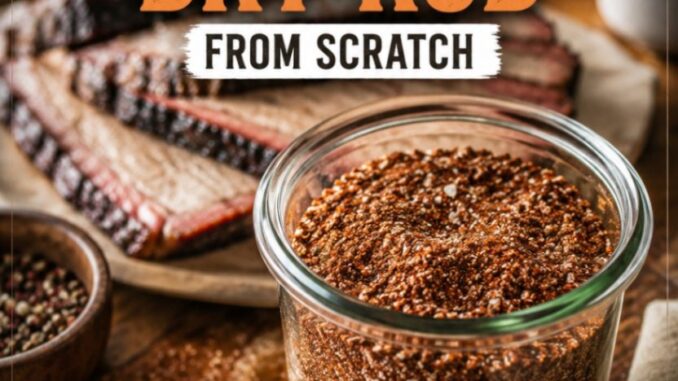
How to Make Texas-Style Dry Rub From Scratch
If you have ever had the privilege of standing in line outside a smokehouse in Central Texas, waiting patiently in the morning heat while the aroma of post oak smoke drifts through the air, you already know that Texas barbecue is a religion. When that butcher paper bundle finally lands on your tray, revealing a thick slab of brisket with a dark, crackling, mahogany bark, it feels almost magical.
How do smoke masters achieve that rich, complex exterior and incredible depth of flavor without slathering the meat in sugary sauces or elaborate marinades?
The secret lies in the simplicity of a classic Texas-style dry rub.
Unlike the sticky, heavily sweetened rubs of Kansas City or the vinegary traditions of the Carolinas, traditional Texas dry rub is built around minimalism, bold contrast, and respect for the beef. It is designed to enhance the natural flavor of the meat rather than mask it, working in tandem with heat and smoke to create a magnificent crust.
Making your own Texas-style dry rub from scratch at home is shockingly simple, remarkably inexpensive, and infinitely better than any mass-produced shaker bottle you will find on a grocery store shelf.
What Makes a Texas Dry Rub Unique?
To understand Texas dry rub, you have to understand the geography and history of Lone Star State barbecue. Central Texas barbecue traditions were heavily influenced by German and Czech butcher shops in the 19th century. Meat was smoked to preserve whatever did not sell fresh at the butcher counter. The seasonings used were basic cupboard staples designed to let the quality of the meat take center stage.
The fundamental core of authentic Texas barbecue seasoning is known as the Dalmatian Rub—a clean, high-contrast mix of black pepper and coarse salt that looks like the spots on a Dalmatian dog.
While purists stick exclusively to salt and black pepper, modern Texas pitmasters often add subtle accent spices like garlic, onion, and a touch of heat or color. What stays strictly out of the classic formula is excessive sugar. High heat and long cook times can cause sugar to scorch and turn bitter, whereas a traditional savory Texas blend builds a durable, flavorful crust over a twelve-hour smoke.
The Essential Ingredients Breakdown
Creating a world-class rub starts with choosing the right individual ingredients. Because the ingredient list is intentionally short, quality and grain size matter tremendously.
1. Coarse Kosher Salt
Never use fine table salt for a Texas dry rub. Table salt has tiny, compact crystals that pack together densely, making it exceptionally easy to over-salt your meat. Instead, choose coarse kosher salt (such as Morton’s or Diamond Crystal). Kosher salt features larger, flatter flakes that dissolve gradually into the protein, drawing out natural moisture and season the meat evenly.
2. 16-Mesh Coarse Black Pepper
This is the single most important component of an authentic Texas rub. Standard fine black pepper from a grocery store tin will turn your meat into a bitter, muddy mess and choke out the airflow in your smoker. 16-mesh coarse black pepper refers to a specific grind size that passes through a screen with sixteen holes per square inch. These large, uniform pepper granules create physical texture on the surface of the meat, catching smoke particles and forming the backbone of the bark.
3. Granulated Garlic
Granulated garlic provides a rich, savory, umbrella-like background note that binds the salt and pepper together. Granulated garlic is preferable to garlic powder because its larger grain size matches the coarse texture of the salt and pepper, preventing it from settling at the bottom of your spice jar.
4. Granulated Onion
Similar to garlic, granulated onion adds a delicate, naturally sweet, allium undertone. It provides depth without burning under long exposure to smoke.
5. Chili Powder or Ancho Powder
While optional in basic Dalmatian rubs, a small touch of mild chili powder or pure ancho chili powder introduces a deep earthy quality and warm color to the exterior of beef, pork, or poultry.
6. Paprika (Sweet or Smoked)
Paprika contributes very little sharp flavor, but it acts as a natural dye that gives the uncooked meat a rich reddish hue, helping accelerate the deep mahogany finish as the smoke interacts with the meat’s surface.
7. Optional: A Touch of Turbinado Sugar
If you intend to use this rub on pork ribs or pork shoulder, a small splash of coarse Turbinado (raw) sugar is acceptable. Turbinado has large, heat-resistant crystals that melt slowly compared to white or brown sugar. Keep it minimal to preserve that distinct Texas profile.
Guidelines for Crafting the Perfect Texas Dry Rub
Follow these crucial rules to ensure your homemade rub achieves the ideal balance of flavor, texture, and performance on the smoker or grill.
Guideline 1: Respect the Particle Size
Texture is everything in a Texas rub. If your salt is coarse, your pepper is fine, and your garlic is powdery, the ingredients will separate in the bottle due to gravity. The small powders will drift to the bottom while the large flakes float to the top, resulting in inconsistent flavor every time you sprinkle. Aim for a uniform coarse grind across all elements.
Guideline 2: Master the Base Ratio
A classic Texas rub uses a foundation ratio based on volume or weight. A foolproof starting point for the master blend is:
-
Two parts coarse black pepper
-
Two parts coarse kosher salt
-
One part granulated garlic
-
Half part granulated onion
-
Half part paprika or chili powder
If you prefer the strict old-school Central Texas style, simply use equal parts by weight of 16-mesh black pepper and coarse kosher salt.
Guideline 3: Measure by Weight When Possible
Volumetric measuring (using cups and spoons) can vary wildly depending on the brand of salt you buy. Diamond Crystal kosher salt, for example, is much lighter and less dense than Morton kosher salt. Using a kitchen scale ensures that your rub delivers identical saltiness every time you whip up a batch.
Guideline 4: Mix in a Dedicated Bowl First
Never pour ingredients directly into your storage jar one by one expecting them to blend well inside the bottle. Measure all spices into a wide stainless steel or glass mixing bowl. Use a wire whisk to thoroughly distribute the ingredients until the color and particle dispersion are completely uniform.
Step-by-Step Instructions: The Ultimate Texas Master Rub
Here is how to bring all these elements together for a versatile rub that works brilliantly on brisket, beef ribs, pork chops, steak, and smoked chicken.
Ingredients Needed:
-
1/2 cup 16-mesh coarse black pepper
-
1/2 cup coarse kosher salt
-
2 tablespoons granulated garlic
-
1 tablespoon granulated onion
-
1 tablespoon sweet paprika
-
1 teaspoon ancho chili powder (optional, for subtle heat)
Method:
-
Prepare Your Workspace: Ensure your mixing bowl, measuring tools, and storage containers are completely dry. Any moisture introduced to dry spices will cause clumping and reduce shelf life.
-
Combine the Base: Add the 16-mesh coarse black pepper and coarse kosher salt to your mixing bowl. Whisk them together for 30 seconds until the black and white grains are evenly distributed.
-
Add the Accent Spices: Sprinkle the granulated garlic, granulated onion, sweet paprika, and optional ancho chili powder over the salt and pepper mixture.
-
Blend Thoroughly: Whisk vigorously, breaking up any tiny natural clumps in the garlic or onion powder. Ensure the paprika tints the mixture evenly.
-
Transfer to Storage: Using a dry funnel, pour the dry rub into an airtight glass jar or a spice shaker with large holes. Label the bottle with the contents and the date prepared.
Guidelines for Applying Texas Dry Rub to Meat
Having a great dry rub is only half the battle; applying it correctly guarantees you get the absolute best results during the cook.
1. Use a Binding Agent Wisely
A binder helps the coarse spices adhere to the surface of the meat. Plain yellow mustard, pickle juice, beef broth, or a light film of neutral cooking oil work exceptionally well. Do not worry—the taste of yellow mustard completely cooks off, leaving zero vinegar flavor behind. Apply a very thin layer over the entire cut of meat before sprinkling your rub.
2. Season from a Distance
Hold your spice shaker roughly 12 to 18 inches above the meat while applying the rub. Rain the spices down in an even, continuous motion. Seasoning from high above prevents concentrated clump zones and creates a uniform layer across every inch of the surface.
3. Pat, Never Rub
Despite the term “dry rub,” you should never aggressively rub or scrub spices into raw meat. Friction tears muscle fibers and washes out the uniform dispersion of the spices. Instead, sprinkle the blend liberally over the meat and gently pat it down with your hand so it adheres firmly to the binder.
4. Don’t Forget the Edges
Great barbecue looks and tastes amazing from every angle. Be sure to tilt your cut of meat and coat the sides, ends, and underside with the same care you give the top.
5. Allow Time for Moisture Extraction
After applying the dry rub, let the seasoned meat rest at room temperature for 30 to 45 minutes before placing it on the smoker. The salt in the rub will begin drawing out natural protein juices, dissolving the salt crystals and forming a tacky coating. This wet paste is what smoke particles stick to, forming a thick, dark bark during the cook.
Storage and Shelf Life Guidelines
Properly stored homemade dry rub can last a surprisingly long time without spoiling, but its flavor potency will diminish over time.
-
Keep It Airtight: Oxygen is the enemy of spice freshness. Store your rub in airtight glass mason jars or heavy-duty plastic spice containers.
-
Store in a Cool, Dark Place: Exposure to direct sunlight, heat from your stove, or high humidity will degrade volatile oils in pepper and cause garlic and onion to harden into concrete-like blocks. A dark pantry or kitchen cabinet is ideal.
-
Avoid Seasoning Directly Over Steam: When seasoning food on a hot grill or stove, avoid shaking your rub bottle directly over rising steam. Moisture will enter the shaker holes, leading to mold and clumping inside the container.
-
Optimal Shelf Life: While a dry rub will technically remain safe to consume indefinitely, it is at its peak flavor within 3 to 6 months. Make smaller batches more frequently so your spices remain fragrant, sharp, and potent.
Final Thoughts
Mastering a Texas-style dry rub is one of the most empowering skills any outdoor cook can learn. By stripping away artificial flavorings, high-fructose corn syrups, and unnecessary fillers, you gain complete control over the flavor profile of your food.
The balance of sharp, pungent coarse pepper, clean salt, and savory aromatics lets the true star of the show—the rich, beefy flavor of properly cooked meat—shine brighter than ever. Mix up a batch this weekend, fire up your smoker, and enjoy the authentic taste of real Texas barbecue right in your own backyard.
Leave a Reply