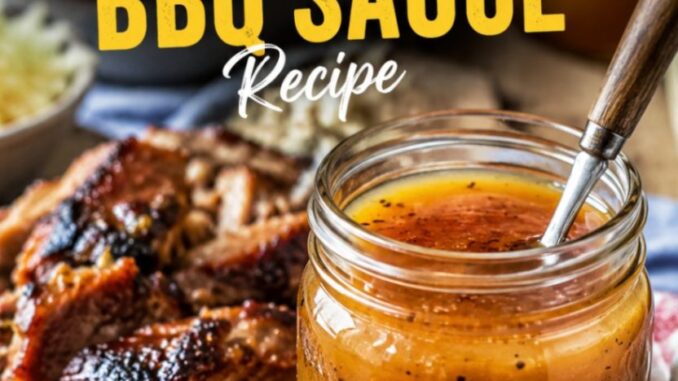
The Best Carolina Vinegar BBQ Sauce Recipe
If you step into the eastern half of North Carolina and ask for “barbecue,” you will not be handed a plate of sweet, sticky, molasses-laden red sauce. You won’t get a thick hickory glaze or a smoky tomato paste. What you will get is a squeeze bottle filled with something thin, vibrant, aggressively tangy, and fiery red.
That is Eastern Carolina vinegar sauce—the undisputed king of mop sauces and the ultimate antidote to rich, fatty pork.
For uninitiated pitmasters, a sauce made primarily of vinegar, crushed red pepper, and salt can seem almost too simple. How could something so thin hold its own against low-and-slow smoked meat? But that simplicity is precisely its power. Heavy, sugary sauces tend to sit on top of meat, masking the hard-earned flavor of the wood smoke and the pork itself. Vinegar sauce does the exact opposite: it cuts through the heavy fat, tenderizes every bite, and highlights the deep, smoky bark you spent twelve hours creating.
Whether you are pulling a smoked pork shoulder, grilling up thick-cut chops, or just looking to elevate weeknight roasted chicken, having a bottle of authentic Carolina vinegar sauce in your fridge is non-negotiable. Here is everything you need to know to make the ultimate version at home.
Understanding the Flavor Profile
To understand why this sauce works, you have to understand the chemistry of barbecue. Pork shoulder is packed with rendered fat and rich collagen. If you coat that with a thick, sugary sauce, your palate gets exhausted after a few bites from the heavy fat and heavy sugar competing for attention.
Eastern Carolina sauce operates on pure balance:
-
Acid: Cider vinegar provides a sharp, bright tang that instantly cleanses your palate and cuts through pork fat.
-
Heat: Crushed red pepper flakes and cayenne pepper supply a lingering warmth that builds gradually rather than overpowering the dish.
-
Sweetness: A tiny touch of brown sugar rounds out the sharp edges of the vinegar without turning the concoction into syrup.
-
Savory Depth: Kosher salt, black pepper, and hot sauce add essential mineral grounding and depth.
Ingredients You Will Need
One of the greatest things about this recipe is that you likely have every single component sitting in your pantry right now. Because there are so few ingredients, quality matters.
-
Apple Cider Vinegar (2 cups): The backbone of the sauce. Use a high-quality, unfiltered apple cider vinegar for a fruity, nuanced acidity.
-
White Distilled Vinegar (1/2 cup): Adding a small portion of white vinegar gives the sauce a sharp, clean punch that brightens the overall flavor profile.
-
Dark Brown Sugar (2 tablespoons): Just enough to balance the harsh bite of the acetic acid. Dark brown sugar provides a subtle hint of molasses.
-
Texas Pete or Frank’s RedHot Sauce (1 tablespoon): Adds liquid heat, color, and a hit of garlicky depth.
-
Crushed Red Pepper Flakes (1 tablespoon): Gives the sauce its iconic visual flecks and a slow-building heat.
-
Fine Kosher Salt (1.5 teaspoons): Essential for unlocking the natural flavors of the meat.
-
Coarsely Ground Black Pepper (1 teaspoon): Adds an earthy, aromatic bite.
-
Cayenne Pepper (1/2 teaspoon): For an immediate, upfront heat on the tip of your tongue.
Step-by-Step Instructions
Making this sauce requires zero advanced culinary skills, but following the proper sequence ensures all the dry spices hydrate and infuse properly into the liquid.
Step 1: Combine the Liquids and Sugar
In a medium stainless steel saucepan, pour in the apple cider vinegar, white distilled vinegar, dark brown sugar, and hot sauce. Place the saucepan over medium heat.
Step 2: Dissolve and Warm
Whisk the mixture continuously for about 2 to 3 minutes until the brown sugar is completely dissolved. You do not want to boil the sauce—boiling off the liquid will cook away the bright volatile notes of the vinegar. You simply want it warm enough to melt the sugar completely.
Step 3: Infuse the Spices
Add the crushed red pepper flakes, kosher salt, black pepper, and cayenne pepper to the warm liquid. Whisk vigorously for another minute until the salt dissolves completely.
Step 4: Cool and Rest
Remove the saucepan from the heat and allow the mixture to cool to room temperature. As the sauce cools, the dried pepper flakes will absorb liquid, soften, and begin releasing their spicy capsaicin into the vinegar base.
Step 5: Bottle and Age
Pour the cooled sauce into a glass Mason jar, a glass bottle, or a plastic squeeze bottle with a tight-fitting lid. Shake well before storing in the refrigerator.
Guidelines for Success: How to Get It Right Every Time
While the recipe itself is straightforward, executing authentic Carolina barbecue requires adhering to a few fundamental guidelines.
Guideline 1: Warm, Don’t Boil
Never let this sauce come to a rolling boil on the stove. Excessive heat changes the chemical structure of vinegar, dulling its crisp bite and burning off subtle aromatic compounds. The stove step is strictly to dissolve the sugar and salt and accelerate the spice infusion.
Guideline 2: Let It Age Before Using
While you can use this sauce immediately, it reaches its peak potential after resting in the refrigerator for at least 24 hours. Given time, the vinegar fully penetrates the crushed red pepper flakes, melding the distinct elements into a unified, balanced condiment.
Guideline 3: Avoid Reactive Cookware
Vinegar is highly acidic. Always prepare and store this sauce using non-reactive materials such as stainless steel saucepans, glass jars, or food-grade plastics. Avoid cast iron, aluminum, or unlined copper pots, as the acid can leach metallic flavors directly into your sauce.
Guideline 4: Use It as a Mop, a Marinate, and a Finishing Sauce
In traditional Carolina barbecue, this liquid serves three distinct purposes throughout the cooking process:
-
The Marinate: Injecting a small amount into pork shoulder before smoking Seasons the interior meat.
-
The Mop: Basting the meat every hour during the final stages of smoking keeps the surface moist without washing away the bark.
-
The Finisher: Drizzling fresh sauce over pulled pork right after shredding lets the meat soak up the juice like a sponge.
Guideline 5: Adjust Heat According to Personal Preference
This base recipe strikes a moderate heat level suitable for most crowds. If you prefer a milder sauce, reduce the crushed red pepper flakes to two teaspoons and omit the cayenne pepper entirely. For a traditional fiery “hot pit” style, double the cayenne and add a pinch of dried habanero flakes.
Frequently Asked Questions
How long does Carolina vinegar sauce last?
Because of the high acidity level, this sauce has an exceptionally long shelf life. Stored in a sealed glass container in the refrigerator, it will easily keep for 3 to 6 months without losing flavor quality or going bad.
Should vinegar BBQ sauce be served hot or room temperature?
It should always be served at room temperature or slightly warm. Pouring ice-cold sauce directly onto freshly shredded, steaming pork shoulder will rapidly drop the temperature of your meat and cause fat to congeal. Keep your squeeze bottle on the counter while cooking or warm it gently before serving.
Can I use this on meats other than pork?
Absolutely. While pulled pork shoulder and whole hog are the traditional pairings, Carolina vinegar sauce works wonders on grilled chicken thighs, smoked turkey breast, grilled shrimp, and even roasted vegetables like cabbage, collard greens, or crispy Brussels sprouts.
The Verdict
In a world filled with high-fructose corn syrup, artificial smoke flavorings, and overly thick sauces, Eastern Carolina vinegar sauce stands as a masterclass in culinary restraint. It doesn’t hide your food; it celebrates it.
By mixing fresh vinegar with a balance of warm spices and letting time do the heavy lifting, you get a bright, fiery, irresistible condiment that turns good barbecue into unforgettable barbecue. Keep a bottle handy in your fridge door, keep your smoker steady, and enjoy the true taste of coastal Carolina.
Leave a Reply